


Spain is generally a very safe country to visit. But if you’ve spent any time researching Barcelona, Madrid, or other popular Spanish destinations, you’ve probably heard plenty of warnings about pickpockets.
So how worried should you actually be?
The reality is somewhere between “don’t worry about it at all” and “someone is definitely going to steal your phone.”
Most travelers visit Spain without having anything stolen. At the same time, pickpockets and scams in Spain are worth knowing about, particularly in crowded tourist areas and on public transportation.
The goal isn’t to spend your vacation suspicious of everyone around you. It’s to recognize a few common tactics, make yourself a difficult target, and then get back to enjoying your trip.
Here’s what to know before you go.
A quick note before we go: Some links in this post may be affiliate links, which means I may earn a small commission if you book or buy through them, at no extra cost to you. Think of it as helping fund my next café con leche while I keep bringing you the best Spain travel tips. I only share things I’d genuinely recommend for your trip.
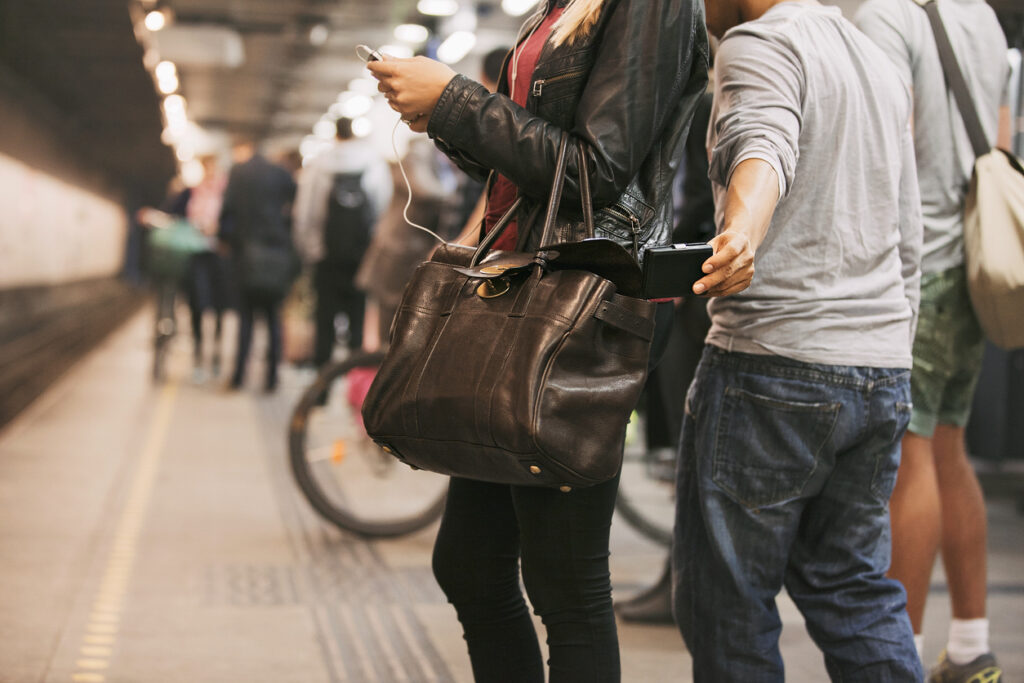
Is Spain Safe for Tourists?
Yes. Spain is generally a safe destination for international travelers.
For most visitors, petty theft is a more realistic concern than serious crime. Spain’s official tourism guidance specifically advises visitors to watch their belongings in crowded places, including public transportation and shopping areas.
That’s an important distinction.
You don’t need to walk around Madrid clutching your purse to your chest. But you probably shouldn’t leave your phone sitting on the edge of an outdoor café table while you’re completely absorbed in conversation either.
A little awareness goes a long way.
Where Are Pickpockets Most Common in Spain?
Pickpockets tend to work where there are crowds, distractions, and opportunities to get physically close to someone without attracting attention.
That means busy Metro cars, train stations, escalators, airport transportation, major attractions, festivals, shopping streets, beaches, nightlife areas, and crowded plazas deserve a little extra attention.
Barcelona has an especially strong reputation for pickpocketing. Be particularly aware around La Rambla, the Gothic Quarter, El Raval, Barceloneta and busy Metro and train stations. These aren’t places you need to avoid. They’re simply places where you should know where your phone and wallet are.
In Madrid, use the same awareness around heavily visited areas such as Puerta del Sol and Plaza Mayor and on busy Metro and airport transportation routes.
But don’t make the mistake of thinking pickpocketing is only something you need to worry about in Spain’s biggest cities. You should use the same basic precautions in any city, town, or village across Spain. Smaller destinations may feel quieter and less hectic, but theft can happen anywhere, particularly during festivals, markets, busy weekends, local celebrations, at transportation hubs, or anywhere visitors naturally gather.
The important thing isn’t memorizing a map of supposedly dangerous streets. A perfectly safe plaza in Barcelona, Madrid, Sevilla, a small coastal town, or a quiet Spanish village can become an opportunity for theft when it’s crowded with distracted people.
Think about the situation rather than just the location.
MUST SEE SPAIN TIP: Pay particular attention during transition moments. Getting on or off a Metro, arriving at a train station, checking Google Maps, buying a ticket, handling luggage, or searching for your hotel are exactly the moments when your attention is divided.
How Pickpocketing Works
Pickpocketing is often less about sneaking up behind you and more about creating a distraction.
Someone gets your attention. You look away. Someone else gets access to your bag, pocket, phone, or luggage.
It can happen incredibly quickly.
That is why one of the best ways to protect yourself is simply to recognize situations designed to capture all of your attention.
Common Scams & Distraction Tactics in Spain
The Clipboard or Charity Petition
Someone approaches you holding a clipboard or petition and asks you to sign something, sometimes claiming to collect signatures or donations for a charity or disability-related cause.
The clipboard itself can become a visual barrier while you’re focused on reading or signing. An accomplice may use the distraction to reach for your phone, wallet, or bag.
You don’t need to investigate whether the person or cause is legitimate.
A simple “No, gracias” while continuing to walk is enough.
The Friendship Bracelet
Someone approaches you and tries to put a string or bracelet around your wrist, sometimes presenting it as a gift.
Once it’s attached, you may suddenly be pressured to pay for it.
Don’t allow someone you don’t know to grab your wrist or put something on you. Step away and keep walking.
The Bird Dropping or Spilled-Liquid Trick
Someone suddenly points out that something has landed on your clothing. It may be described as bird droppings, mustard, food, or another spilled substance.
Then a helpful stranger appears and offers to clean you up.
The problem isn’t really the stain.
While you’re focused on your clothes and the person helping you, someone may be trying to get into your pockets or bag.
If something mysteriously appears on your clothing, move away from anyone offering unsolicited help, check your belongings, and clean yourself up somewhere safe.
The Fake Police Officer
A more intimidating version involves someone claiming to be a plainclothes police officer.
They may show identification and ask to see your wallet, money, or identification under the pretense of checking for counterfeit bills or another problem.
Don’t hand your wallet or cash to a stranger simply because they claim to be police.
If you’re unsure whether someone is a legitimate officer, ask to see official identification and seek help from uniformed police or at a police station. If you believe you’re in danger or dealing with an emergency, call 112.
The Flat-Tire Distraction
This one is particularly relevant if you’re renting a car in Spain.
Someone may point out a supposed problem with your tire or vehicle and encourage you to pull over or get out to inspect it. While you’re distracted outside the car, another person may target luggage or valuables inside.
Versions of this tactic have been documented on Spanish roads, including cases involving tourists on the AP-7.
If someone unexpectedly signals that something is wrong with your rental car, be cautious about where you stop and who you accept help from. Never leave phones, purses, passports, or luggage unattended while everyone gets out of the vehicle.
The Unpriced Menu or Taxi Surprise
Not every unpleasant tourist experience involves pickpocketing.
If you’re ordering a restaurant special without a listed price, it’s perfectly reasonable to ask the price before ordering.
With taxis, use official taxi ranks or clearly licensed taxis and understand how fares work at your destination. Airport taxi rules, fixed fares, and supplements can vary by city, so check official local information rather than relying on what another traveler paid.
If a price feels unclear, ask before agreeing.
The Rosemary Trick
Someone approaches you offering a sprig of rosemary, sometimes placing it directly into your hand before you have a chance to say no. It may initially seem like a friendly gesture or a free good-luck charm.
Once you accept it, however, you may be pressured to give money. In some versions, the interaction becomes a distraction while another person targets your bag, phone, or wallet.
The easiest response is not to take the rosemary in the first place.
Keep your hands to yourself, say “No, gracias”, and continue walking. If someone puts something into your hand anyway, don’t allow the interaction to turn into a conversation or distract you from your belongings.
You don’t owe someone money simply because they handed you something you didn’t ask for.
Protecting Your Bag and Phone
You don’t need a complicated anti-theft system.
A zipped cross-body bag positioned where you can see and control it is a simple choice for crowded sightseeing days. Avoid carrying your phone or wallet in a loose back pocket, particularly on public transportation.
Your phone deserves special attention.
It may be one of the most valuable things you’re carrying, but it’s also incredibly easy to set down without thinking.
Don’t leave it sitting loosely on an outdoor café or restaurant table. The same goes for your wallet and camera.
And avoid hanging a handbag from the back of your chair where you can’t see it. Keep your bag physically close to you and under your control.
What Can You Buy to Keep Your Belongings Safe in Spain?
You don’t need to travel around Spain wearing a money belt under three layers of clothing. A couple of inexpensive accessories can make it much harder for someone to grab your phone or get into your bag without you noticing.
A Zippered Crossbody Bag
For sightseeing, one of the easiest options is a crossbody bag that fully zips closed.
The important part isn’t just that it’s a crossbody. It’s how you wear it.
Keep the strap across your body with the bag resting toward the front of your hip or stomach, especially when you’re on the Metro, standing in a crowd, walking through a busy market, or visiting a major attraction.
Don’t swing it around behind you where you can’t see the zipper. In particularly crowded situations, I like the simple habit of resting a hand over the zipper or top of the bag.
You don’t necessarily need a special “anti-theft” bag. A comfortable crossbody with secure zippers that you can keep in front of you can work perfectly well.
I recommend a crossbody bag like this→
A Phone Wrist Strap or Tether
I also like the idea of a phone wrist strap or phone tether, particularly because your phone is constantly coming in and out of your bag while you’re traveling.
You’ll use it to check Google Maps, take photos, pull up train tickets, translate something, check restaurant reservations, and figure out where you’re going next.
A wrist strap attaches to your phone or phone case and creates a small loop that goes around your wrist. Put the loop around your wrist before you pull your phone out in a crowded area.
That way, if someone tries to grab the phone from your hand or you accidentally drop it while taking a photo, it’s still physically attached to you.
Another option is a longer phone tether that attaches your phone to your crossbody bag or clips onto a secure part of your clothing. Just make sure the tether itself is securely attached and isn’t hanging somewhere that makes your phone easier to access.
I recommend a phone wrist straps like this →
The Best Setup Is the One You’ll Actually Use
You don’t need to turn yourself into Fort Knox.
A zipped crossbody bag worn in front of your body plus a wrist strap on your phone is a simple setup that works well for sightseeing. Your wallet and passport stay zipped inside your bag, while your phone remains attached to you when you’re actively using it.
The accessories are helpful, but your habits still matter more.
Keep the bag zipped. Move it to the front in crowds. Put the phone strap around your wrist before taking your phone out. Don’t leave your phone sitting on a café table just because it has a strap attached to it.
The goal isn’t to make your belongings impossible to steal. It’s to make them a lot less easy to steal.
Public Transportation Is a Time to Pay Attention
Spain’s trains, buses and Metro systems are one of the best parts of traveling around the country.
Crowded transportation also creates perfect conditions for petty theft.
When you’re standing in a packed Metro, move your bag to the front of your body and make sure it’s closed. Pay particular attention around train doors, platforms and escalators, where crowds naturally compress and people bump into one another.
That doesn’t mean you should feel nervous every time someone brushes against you.
Just switch from relaxed sightseeing mode to slightly-more-aware mode when things get crowded.
What to Do When Someone Approaches You
One of the easiest safety habits is learning that you don’t have to engage.
You don’t need to stop because someone hands you a clipboard.
You don’t need to accept a flower, rosemary, bracelet, or other “gift.”
You don’t need to let a stranger help with your luggage or ticket machine.
And you don’t have to worry about seeming rude.
A firm “No, gracias”, a step backward, and continuing to walk will get you out of many unwanted interactions.
ATM and Card Safety
Spain is very card-friendly, so you may not need much cash at all.
When you do need an ATM, I prefer using a machine associated with an established bank rather than accepting help from anyone who approaches while you’re completing the transaction.
Cover the keypad when entering your PIN, pay attention to any fees or currency-conversion offer displayed on the screen, and cancel the transaction if something doesn’t feel right.
It’s also smart not to keep every payment method in one place. If your wallet disappears, having a separate backup card can make a frustrating situation much easier to manage.
What Should You Do If You’re Pickpocketed in Spain?
First, get somewhere safe and figure out exactly what’s missing.
If a bank card was stolen, freeze or cancel it as quickly as possible. If your phone is gone, use its device-locating and security tools if you can safely do so and protect access to important accounts.
For a stolen passport or other travel documents, contact the appropriate embassy or consulate for your nationality.
Report the theft to Spanish police as well. A police report may be required if you intend to make a travel insurance claim.
Spain also has tourist-assistance resources in some destinations, and the AlertCops app provides another way to communicate with Spanish law enforcement.
For an immediate emergency anywhere in Spain, call 112.
Keep Your Passport Safe
Losing a passport can turn an annoying theft into a major travel headache.
Think about whether you actually need to carry your passport with you on a particular sightseeing day, and follow the identification requirements that apply to your situation. Keep backup access to your passport details somewhere separate from the original.
Most importantly, don’t keep your passport, every bank card, all your cash, and your phone together in one easily accessible bag.
If one thing disappears, you don’t want everything disappearing with it.
Don’t Let Pickpocket Warnings Ruin Spain
This part matters.
Reading about pickpockets and scams in Spain can make it sound like you’ll spend your entire vacation dodging criminals.
You won’t.
Millions of people visit Spain and go home with their phones, wallets, passports, and nothing more dramatic than an alarming number of photos of tapas.
Use sensible habits.
Keep your bag closed. Know where your phone is. Pay attention when you’re in a crowd. Don’t leave valuables unattended. Be skeptical when an unexpected interaction seems designed to consume all of your attention.
Then go enjoy Spain.
Keep Spain’s Safety Information With You
Knowing how to avoid pickpockets is useful. Knowing what to do if something actually goes wrong is even more important.
That’s why I created my Spain Health & Safety Checklist.
It gives you important health and safety information to keep handy before and during your trip, including emergency numbers, healthcare and pharmacies, traveling with medications, travel insurance reminders, common health and safety concerns, what to prepare before you leave, and what to do if you need medical care while you’re in Spain.
Hopefully, most of it stays firmly in the “good to know but never needed” category.
But if something does go wrong, you’ll already have the information instead of trying to find it while you’re stressed.
Get the Spain Health & Safety Checklist →
A Little Preparation Goes a Long Way
Once you’ve handled the practical stuff, you can get back to planning the fun part.
If you’re still deciding where to go in Spain, take my free Spain Travel Style Quiz.
Answer a few quick questions about how you like to travel, and you’ll discover the destinations, experiences, food, culture, and little moments in Spain that fit your travel style.
Because your perfect Spain trip isn’t necessarily someone else’s.
Take the Free Spain Travel Style Quiz →
Pickpockets and Scams in Spain: FAQs
Does Spain have a pickpocket problem?
Yes, pickpocketing is a concern in busy tourist areas in Spain, particularly in crowded transportation hubs and major visitor destinations, but Spain is still generally a safe country to visit.
The best protection is simple awareness. Keep bags closed and under your control, secure your phone and wallet, and pay extra attention when you’re in crowds or someone unexpectedly tries to distract you.
What are the most common scams in Spain?
Common tourist scams and distraction tactics in Spain include fake petitions, friendship bracelets, spilled-liquid distractions, people posing as police, and flat-tire distractions targeting drivers.
The details may change, but the principle is usually the same: someone creates a distraction, applies pressure, or occupies your attention while money or valuables become vulnerable.
Is it safe for Americans in Spain right now?
Yes, Americans can generally travel safely in Spain, but they should check the current U.S. Department of State travel advisory before departure and take normal precautions against theft and other tourist-targeted crime.
Spain attracts travelers from around the world, and the precautions in this guide apply to international visitors generally, not just Americans.
What countries are the worst for pickpockets in Europe?
There is no single authoritative ranking that definitively identifies the worst European countries for pickpocketing. Petty theft is better evaluated by destination and situation than by labeling an entire country as dangerous.
Crowded attractions, public transportation, train stations and heavily visited areas in major European cities create opportunities for pickpockets regardless of the country.
The Bottom Line
Pickpockets and scams in Spain are something you should understand, but they aren’t a reason to be afraid of visiting.
Spain is generally a safe country. For most travelers, the more realistic crime risk is having a phone, wallet, or other valuable stolen during a distracted moment.
Recognize the common distraction tactics. Keep your valuables secure. Pay attention in crowds and on public transportation. Don’t leave your phone sitting on a café table. Be cautious when a stranger suddenly creates a reason for you to stop and focus on them.
Then stop thinking about pickpockets.
You came to Spain to experience Spain, not spend your entire vacation guarding your purse.
Further Reading
Watch Your Wallet! How to Avoid Being Pickpocketed in Spain



Be the first to comment