
Santiago de Compostela may be famous as the finish line of the Camino de Santiago, but you don’t have to walk hundreds of kilometers across Spain to appreciate it.
This Galician city feels completely different from Madrid, Barcelona or the cities of Andalucía. Think granite streets, medieval buildings, green parks, Galician food and pilgrims arriving in Plaza del Obradoiro after days or weeks on the Camino.
The historic center is compact enough to explore on foot, which also makes Santiago an easy city to enjoy without an overly complicated itinerary.
If you’re looking for the best things to do in Santiago de Compostela, start with these 10 experiences.
A quick note before we go: Some links in this post are affiliate links. I may earn a small commission if you book through them, at no extra cost to you. It helps fund my next café con leche and keeps the Spain travel tips coming. I only recommend things I’d genuinely choose for my own trip.
1. Visit the Cathedral of Santiago de Compostela
There’s really only one place to start.
The Cathedral of Santiago de Compostela is the spiritual and physical heart of the city and the traditional endpoint of the Camino de Santiago.
Even if you’re not religious, it’s hard not to feel something standing in Plaza del Obradoiro and watching pilgrims arrive.
Some are celebrating. Some are exhausted. Some are crying.
Then there’s the Cathedral itself.
Go inside, see the tomb traditionally associated with the Apostle Saint James and give yourself enough time to actually look around rather than treating it like another sightseeing stop.
Entrance to the basilica itself is free, while other Cathedral experiences require tickets. These include the museum, Pórtico de la Gloria and rooftop visits.
If there’s one attraction in Santiago where I’d seriously consider booking a guided experience, this is it.
Find Your Spain Travel Style
Santiago is perfect for some travelers.
For others, the beach towns of Andalucía, food culture of San Sebastián or energy of Madrid might be a better fit.
That’s why I created my free Spain Travel Style Quiz.
Answer a few quick questions about how you like to travel and you’ll discover the destinations, experiences, food, culture and little moments in Spain that fit your travel style.
Because your perfect Spain trip isn’t necessarily someone else’s.
Take the Free Spain Travel Style Quiz →
2. Stand in Plaza del Obradoiro
Don’t rush through Plaza del Obradoiro just because you’re headed toward the Cathedral.
Stop for a minute.
This is the square where pilgrims traditionally finish their Camino, and watching people arrive is one of the most memorable things you can do in Santiago.
The Cathedral dominates one side, but the square is surrounded by other monumental buildings, including the historic Hostal dos Reis Católicos.
I’d come through during the day and then return again later.
Santiago feels particularly atmospheric once the day-trippers disappear and the stone buildings are illuminated at night.
3. See the Pórtico de la Gloria
If you have more time at the Cathedral, don’t stop with the basilica.
The Pórtico de la Gloria is one of the Cathedral’s great artistic treasures, created by Master Mateo and his workshop in the late 12th and early 13th centuries.
Access is controlled and ticketed, so this is one of the things I’d plan ahead rather than assuming you’ll be able to wander in.
You can visit it separately or as part of a broader Cathedral Museum experience.
If you love medieval art, history or architecture, put this high on your Santiago list.
4. Walk the Streets of the Old Town
One of the best things to do in Santiago de Compostela doesn’t require a ticket at all.
Walk.
The historic center is filled with arcaded streets, little squares, churches, university buildings and granite façades.
Explore Rúa do Vilar, Rúa Nova and Rúa do Franco, but don’t worry too much about following a precise route.
This is a city that rewards wandering.
Rain is also very much part of Galicia, and Santiago is unusually well suited to it. Those beautiful stone arcades suddenly become extremely practical when the weather turns.
I’d give yourself at least an hour when you aren’t trying to get anywhere in particular.
5. Eat Your Way Through Mercado de Abastos
If you’ve read much of Must See Spain, you probably know I’m going to send you to the market.
In Santiago, that’s the Mercado de Abastos.
It’s one of the city’s most important food spaces and a great introduction to what makes Galician food so good.
Look for seafood, fish, cheeses, vegetables and other regional products before stopping for something to eat.
Galicia is one of Spain’s great food destinations, so don’t treat lunch as something you squeeze between attractions.
Try pulpo á feira, empanada gallega, pimientos de Padrón, local seafood and Galician cheeses.
And save room for tarta de Santiago.
6. Walk Through Parque da Alameda
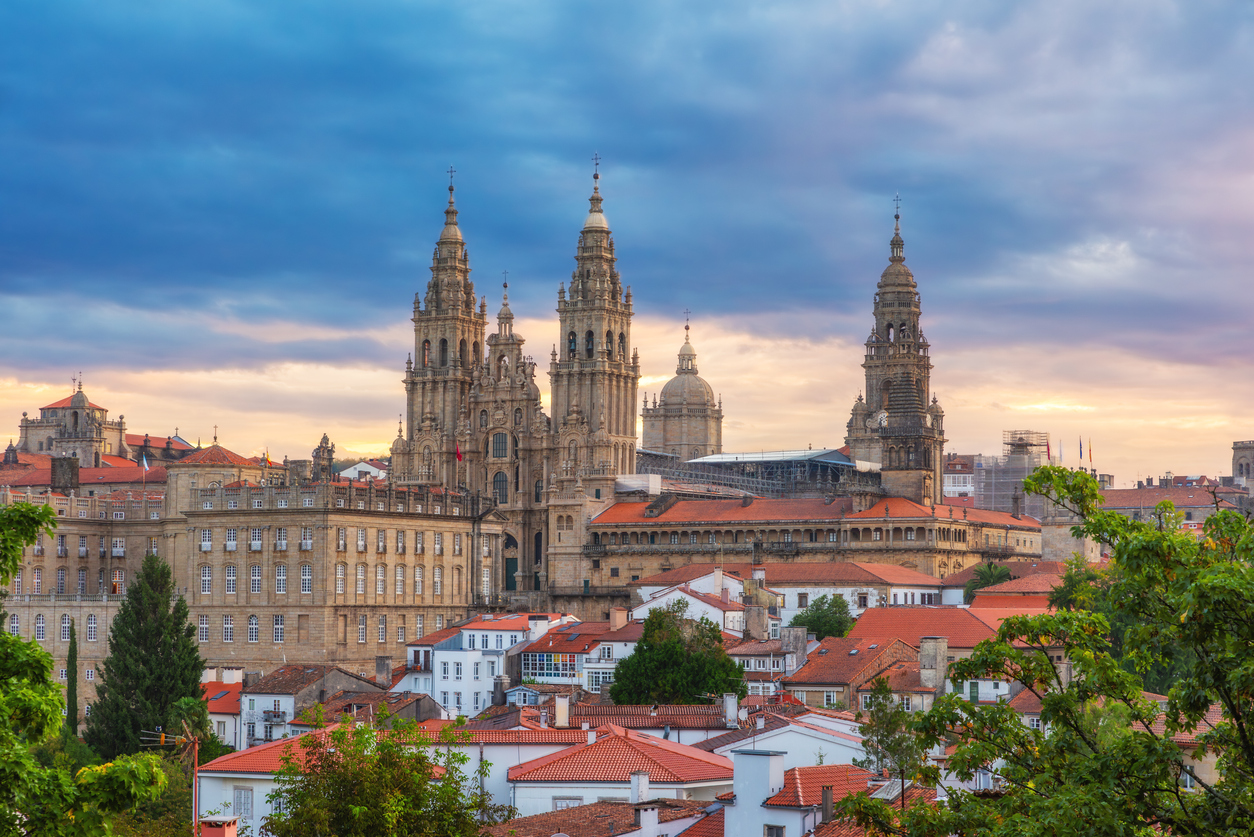
For one of the classic views of Santiago, head to Parque da Alameda.
The park gives you a beautiful perspective over the historic center with the Cathedral rising above the rooftops.
It’s an easy place to work into your itinerary because it’s right beside the old city.
I’d come around late afternoon or toward sunset.
After spending hours among Santiago’s narrow stone streets, the greenery and open views are a nice change of pace.
And yes, this is where I’d take one of those photos that makes everyone ask where in Spain you are.
7. Explore San Martiño Pinario
Just behind the Cathedral you’ll find the enormous Monastery of San Martiño Pinario.
It’s easy to overlook when the Cathedral is right beside it, but don’t.
The monastery complex is one of Santiago’s major historic monuments and gives you another look at the city’s religious and architectural history.
This is exactly why I’d give Santiago more than a few hours.
Once you get beyond the Cathedral, you start realizing how much history is packed into this relatively small historic center.
8. Visit the Museo do Pobo Galego and Bonaval
If you want to understand Galicia rather than simply see Santiago, head toward San Domingos de Bonaval.
The Museo do Pobo Galego explores Galician culture, traditions and everyday life.
The building itself is worth seeing too, particularly its remarkable triple spiral staircase.
Then walk through Parque de San Domingos de Bonaval.
It’s quieter than the area surrounding the Cathedral and gives you another perspective over the historic city.
I’d choose this combination when you want a break from Santiago’s busiest streets without leaving the center.
9. Experience Santiago’s Food and Tapas Culture
Santiago isn’t a city where I’d finish sightseeing and then start thinking about food.
Food is part of the sightseeing.
Galicia has some of the best raw ingredients in Spain, especially when it comes to seafood.
Look for pulpo, zamburiñas, mussels, razor clams, Galician beef, empanada and regional cheeses.
Then try a glass of Albariño or another Galician wine.
A food tour can be particularly useful here because Galician cuisine has its own identity that can get lost when people talk about “Spanish food” as if the entire country eats the same things.
I’d book one early in your stay.
That way you’ll know what you want to keep eating afterward.
10. See Santiago From the Cathedral Rooftops
If you’re comfortable with heights and stairs, consider booking the Cathedral rooftop experience.
The visit takes you above the Cathedral and gives you a completely different perspective over Santiago’s historic center.
This isn’t something you can simply wander up to on your own. Rooftop visits are guided and require a ticket.
I’d choose this over trying to cram another museum into the day.
You’ve already seen Santiago from street level.
Now you get to see those granite rooftops from above.
What About the Botafumeiro?
You’ve probably seen videos of the enormous Botafumeiro swinging through the Cathedral.
Don’t build your entire visit around assuming you’ll see it.
The Botafumeiro is used according to a liturgical calendar and for certain celebrations, so it does not necessarily operate during every Pilgrim’s Mass.
If seeing it matters to you, check the current Cathedral information before your visit.
And even if you don’t see it swing, the Cathedral is still worth visiting.
How Many Days Do You Need in Santiago de Compostela?
I’d give Santiago two days if your itinerary allows.
One day is enough to see the Cathedral, Plaza del Obradoiro, historic center, market and Alameda.
But two days gives you room for the Cathedral’s additional experiences, museums, food and wandering without turning the city into a checklist.
Three days makes sense if you’re traveling slowly, want to explore more of Galician culture or plan to use Santiago as a base.
Santiago de Compostela in One Day
If you only have one day, keep it simple.
Start in Plaza del Obradoiro and visit the Cathedral in the morning. Add the Pórtico de la Gloria if you’ve reserved it in advance.
Then wander through the old town toward Mercado de Abastos and stop for a Galician lunch.
Spend the afternoon exploring the historic streets and San Domingos de Bonaval.
Finish at Parque da Alameda for the classic Cathedral view.
That’s enough.
You don’t need to see every museum and church in Santiago to have a worthwhile visit.
Where to Store Luggage in Santiago de Compostela
If you’re arriving in Santiago before hotel check-in or have a few hours after checking out, don’t drag your suitcase around the historic center. Santiago is wonderfully walkable, but its stone streets and steps are much more enjoyable without luggage.
LockHereNow: Best Luggage Storage in Santiago de Compostela is a convenient option for securely storing your bags while you explore. Drop off your luggage, then use those extra hours for the Cathedral, Mercado de Abastos, lunch or one last walk through the Old Town.
It’s also useful if you’re finishing the Camino and want to explore Santiago without carrying your pack everywhere.
Read more: LockHereNow: Best Luggage Storage in Santiago de Compostela
Store Your Luggage With LockHereNow →
Take a Guided Tour of Santiago
Santiago is very easy to explore independently, but it’s also a city where knowing the story behind what you’re seeing makes a difference.
A walking tour can explain the Camino, the Cathedral, medieval Santiago and the traditions that have developed around centuries of pilgrimage.
I’d especially recommend one if you’re visiting Santiago without actually walking the Camino.
Otherwise, it’s easy to see pilgrims everywhere without fully understanding what their arrival represents.
Where to Stay in Santiago de Compostela
For a first visit, I’d stay close to the historic center.
Being able to walk out in the evening after the daytime crowds have thinned is one of the best reasons to spend the night in Santiago rather than visiting only as a day trip.
You also won’t need to think much about transportation.
Most of the places you’ll want to visit are concentrated around the old city.
Plan Your Santiago Trip
Santiago may be compact, but you’ll still end up juggling Cathedral tickets, hotel information, restaurants, transportation and everything else you’re planning in Galicia.
That’s why I created my Spain Travel Planner for Google Sheets.
Use it to organize reservations, confirmation numbers, transportation, restaurants and your day-by-day itinerary in one place.
Get the Spain Travel Planner for Google Sheets →
Best Things to Do in Santiago de Compostela FAQs
What not to miss in Santiago de Compostela?
Don’t miss the Cathedral of Santiago de Compostela, Plaza del Obradoiro, the historic old town, Mercado de Abastos and the view from Parque da Alameda.
If you have additional time, book the Pórtico de la Gloria or Cathedral rooftops and visit San Martiño Pinario and San Domingos de Bonaval.
The Cathedral and the four historic squares surrounding it are considered essential stops for first-time visitors by Santiago’s official tourism office.
How many days should you spend in Santiago de Compostela?
Two days is ideal for most first-time visitors to Santiago de Compostela.
You can see the major highlights in one full day, but two days lets you explore the Cathedral, old town, food scene, parks and museums without rushing.
If Santiago is part of a larger Galicia trip, I’d spend two nights here before continuing elsewhere.
What to do in Santiago de Compostela for a day?
With one day in Santiago de Compostela, visit Plaza del Obradoiro and the Cathedral, walk through the historic center, eat at or near Mercado de Abastos and finish at Parque da Alameda.
If the Pórtico de la Gloria is important to you, reserve a timed visit in advance and build your day around it.
The official Santiago tourism office recommends the historic streets and plazas, Cathedral and its special visits as the foundation of a one-day itinerary.
Is Santiago Compostela worth visiting?
Yes, Santiago de Compostela is absolutely worth visiting, even if you aren’t walking the Camino de Santiago.
The Cathedral may be the reason the city became famous, but Santiago also offers a UNESCO-listed historic atmosphere, excellent Galician food, beautiful architecture, parks and a culture that feels distinctly different from other parts of Spain.
I’d especially recommend it if you like history, food, walkable cities and destinations with a strong sense of place.
One Last Thing
You don’t need to walk the Camino to feel what makes Santiago special.
But you should slow down enough to notice it.
Stand in Plaza del Obradoiro and watch someone finish a journey they’ve been making for weeks. Wander the wet granite streets. Eat too much Galician seafood. Walk through the market. Find the Cathedral again from Alameda.
The best things to do in Santiago de Compostela aren’t only about checking monuments off a list.
They’re about experiencing a city that has been welcoming people at the end of a journey for centuries.
And even if you arrived by train, plane or rental car, there’s something pretty special about being there when they finally make it.
Accuracy note: Attraction access, Cathedral visits, religious services, tour schedules, opening hours and ticket requirements can change. Always verify current information with the Cathedral, attraction or official tourism provider before your trip.
Further Reading
Tours and Excursions in Spain: What’s Actually Worth Booking?
Getting Around by Plane in Spain: A Tourist’s Guide
Spain Metro Guide: How to Use the Metro Like a Local
Driving & Renting a Car in Spain: What Tourists Need to Know
exploring:
Leave a comment