
You can go to Spain, see the Sagrada Família, visit the Alhambra and spend a few days in Madrid and have an incredible trip.
But some of my favorite unique experiences in Spain happen beyond the country’s biggest attractions.
You can sleep in a centuries-old monastery, soak in candlelit thermal baths, taste wine where the grapes are grown or wander through a Roman city that once served as the capital of an entire province.
Spain is particularly good at making history feel like part of everyday life. Old palaces become hotels. Roman ruins sit in the middle of modern cities. Medieval monasteries become places where you can actually spend the night.
So if you want to add something a little different to your Spain itinerary, these are the experiences I’d start with.
A quick note before we go: Some links in this post may be affiliate links. I may earn a small commission if you book through them, at no extra cost to you. It helps fund my next café con leche and keeps the Spain travel tips coming. I only recommend things I’d genuinely choose for my own trip.
Unique Places to Stay in Spain
1. Spend the Night in a Spanish Parador
One of the most uniquely Spanish places you can stay isn’t a particular hotel at all.
It’s a Parador.
Paradores are a network of hotels throughout Spain, many located inside historic buildings like castles, monasteries, convents and palaces. Others occupy incredible natural settings.
I love the concept because your hotel becomes part of the experience.
Instead of visiting a castle and then returning to a generic hotel room, you might actually spend the night inside one.
A few stand out in particular.
Parador de Ronda
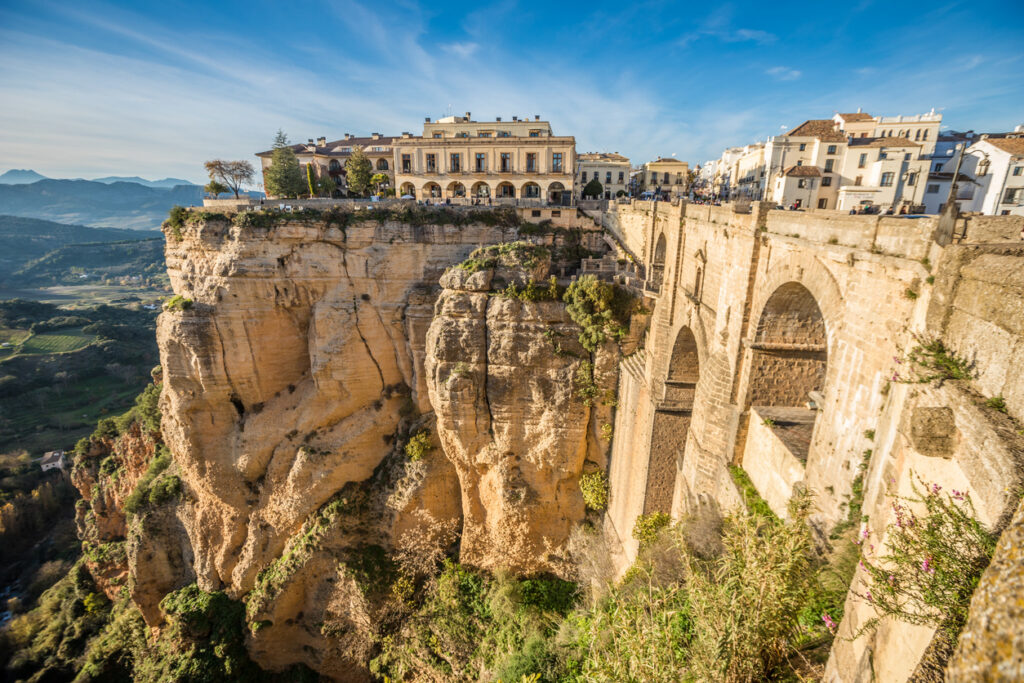
If you’re visiting Ronda, it’s hard to beat the location of the Parador de Ronda.
It sits beside the famous Puente Nuevo, overlooking the dramatic Tajo gorge. The building incorporates the city’s former town hall, and its terrace and pool have incredible views over the surrounding landscape.
Ronda is already one of Andalucía’s most memorable towns. Waking up right beside the gorge turns an overnight stay into part of the experience.
Parador de Santo Estevo, Ribeira Sacra
This might be one of the most atmospheric Paradores in Spain.
The Parador de Santo Estevo occupies a historic Benedictine monastery in Galicia’s Ribeira Sacra. The former monks’ cells have been converted into guest rooms, and the monastery’s historic cloisters remain part of the property.
There’s even a spa in the former wine cellars.
The setting is just as impressive. You’re surrounded by forests and the dramatic Sil River canyon in one of Spain’s most beautiful wine regions.
If you want a stay that feels completely removed from a typical city hotel, this is the kind of place I’d choose.
Parador de Granada
Then there’s the Parador de Granada.
You’re actually staying within the Alhambra complex.
For me, Granada has always had this haunting, almost magical feeling. I spent my first six months in Spain there, and it’s still one of the places that feels most distinctive to me.
Being able to stay within the grounds of the Alhambra takes that experience to another level.
2. Stay Somewhere With Centuries of History Built Into the Hotel
Paradores aren’t the only way to sleep inside Spanish history.
Spain has some fantastic independent and boutique hotels built into palaces, convents and other historic buildings.
Caro Hotel, Valencia
The Caro Hotel is exactly the kind of hotel I’d choose when I want the stay itself to feel connected to the city.
The property incorporates historic buildings and preserves architectural remains from different periods of Valencia’s history. Roman remains, part of the city’s Arab wall and elements of a Gothic palace are integrated into the hotel.
Instead of decorating a new hotel to look historic, you’re actually sleeping inside the layers of Valencia’s past.
Caro Hotel: Secrets of Valencia’s Top Monument‑Hotel
Áurea Convento Capuchinos, Segovia
Another one I’d look at is the Áurea Convento Capuchinos in Segovia.
It’s a former convent dating to the 17th century that has been transformed into a hotel.
I love pairing a stay like this with a historic city. You can spend the day exploring Segovia’s Roman aqueduct, cathedral and Alcázar, then return to a hotel that feels connected to the same history.
Castilla Termal Monasterio de Valbuena, Ribera del Duero
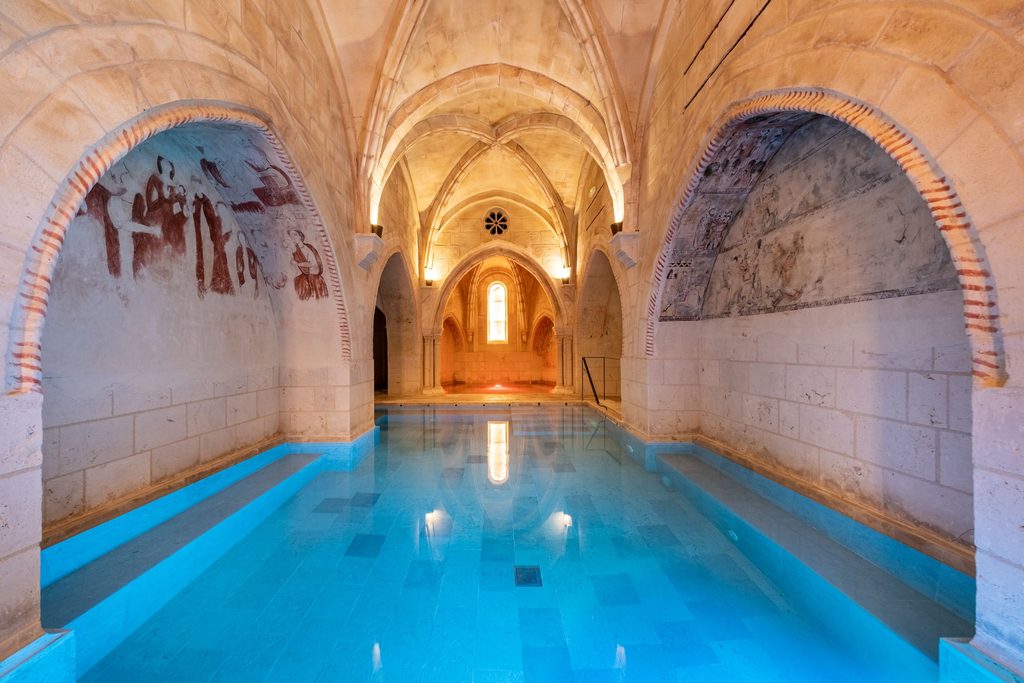
If you want to combine a historic stay, spa and wine country, Castilla Termal Monasterio de Valbuena would be very high on my list.
The hotel occupies a beautifully restored 12th-century Cistercian monastery in the Ribera del Duero wine region. It’s now a luxury hotel and wellness retreat, but the historic architecture is still a huge part of the experience.
This is the kind of place where I’d actually plan time to enjoy the hotel rather than treating it simply as somewhere to sleep.
Spend the day visiting Ribera del Duero wineries, come back for the thermal spa and then stay overnight in a centuries-old monastery.
If you’re building a Spain trip around wine, food and a couple of special hotels, this would be a splurge I’d consider.
Looking for More Unique Places to Stay in Spain?
Spain has far too many incredible hotels to fit into one list. From historic Paradores and converted monasteries to boutique hotels, countryside retreats and stays right in the heart of Spain’s most beautiful cities, sometimes the hotel can be part of the experience.
Use the map below to explore more places to stay across Spain and find something that fits your itinerary, budget and travel style.
Explore More Places to Stay in Spain →
Special Experiences in Spain
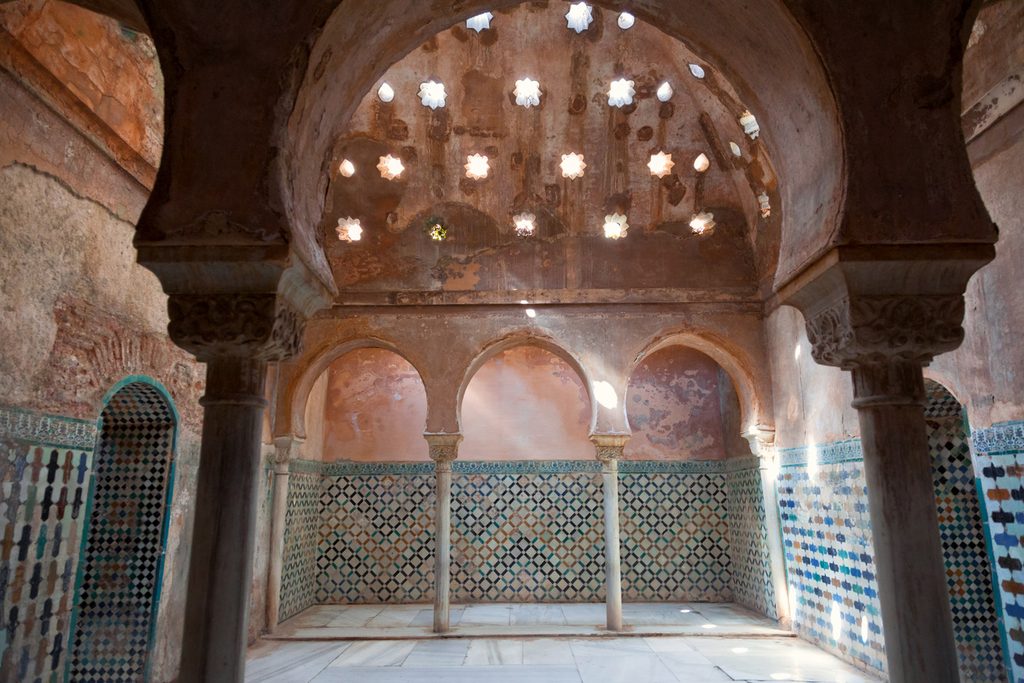
3. Spend a Few Hours in a Hammam
Spain’s Islamic history isn’t something you only encounter at the Alhambra or Mezquita.
You can experience a modern interpretation of traditional Arab baths in several Spanish cities.
A hammam usually involves moving between baths at different temperatures, often with steam rooms and optional massages. After several days of walking through Spanish cities, this can feel very, very good.
And this is one experience where I have a definite favorite.
AIRE Ancient Baths Sevilla
I absolutely love AIRE Ancient Baths Sevilla.
It’s tucked into the Santa Cruz neighborhood inside a historic Mudéjar-style palace house. The experience centers around candlelit thermal baths at different temperatures, with massages and other treatments available.
The whole place feels removed from the city outside.
There’s even a rooftop experience where you can soak with views toward the Giralda.
If you’re spending several days sightseeing in Seville, I’d book this toward the middle or end of your stay when your feet are starting to question your itinerary.
Hammam Al Ándalus, Granada
Granada is another perfect place for this experience.
Hammam Al Ándalus Granada draws on the city’s Andalusi history and creates a quieter, atmospheric experience with thermal baths, steam and optional massage treatments.
I’d pair it with a day exploring the Alhambra and Albaicín.
After hours of walking through Granada’s hills and cobbled streets, slipping into a warm bath feels especially good.
Hammam Al Ándalus, Córdoba
You can also find Hammam Al Ándalus in Córdoba, which fits beautifully into a trip centered around the city’s Islamic heritage.
Visit the Mosque-Cathedral and wander through Córdoba’s historic center, then slow everything down with a hammam experience.
I particularly like this in cities like Granada and Córdoba because the experience connects naturally with the history you’re already learning about.
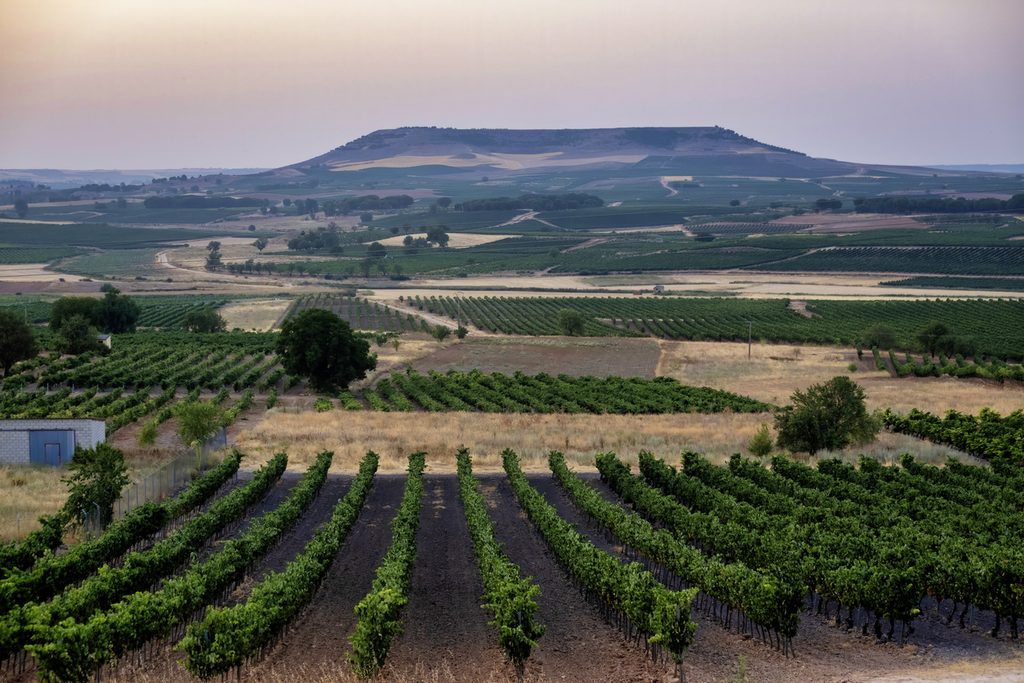
4. Spend a Day in Ribera del Duero Wine Country
If you like Spanish wine, don’t just order it at dinner.
Go see where it comes from.
Ribera del Duero stretches through Castilla y León along the Duero River and is one of Spain’s major wine regions. It’s especially known for Tempranillo-based wines and has everything from centuries-old underground cellars to striking contemporary wineries.
Visit a bodega, walk through the vineyards and do a proper tasting.
Then have lunch.
This is Castilian food country, so you’ll find roast lamb, cured meats, cheeses and hearty dishes that make a lot more sense when you’re eating them alongside the wines produced nearby.
And if you want to make the wine experience part of an overnight stay, this is where Castilla Termal Monasterio de Valbuena fits beautifully.
I’d consider booking a tour or driver rather than driving yourself if you’re planning several tastings.
5. Eat Pintxos One Bar at a Time in San Sebastián
You don’t need a formal tour for every special experience.
Sometimes the experience is simply knowing how to do something the local way.
In San Sebastián, spend an evening going from pintxos bar to pintxos bar rather than sitting down for one long meal.
Order a couple of pintxos and a drink. Eat, enjoy it and move on to the next place.
It’s simple, social and one of my favorite ways to experience Spanish food culture.
If you’re nervous about navigating the bars, this is one city where I’d consider taking a pintxos tour on your first evening. Then you can confidently do it yourself for the rest of your stay.
6. Learn to Make Paella in Valencia
You can eat paella all over Spain.
But if you’re going to turn it into an experience, do it in Valencia.
This is where paella originated, and a good cooking class gives you much more context about what actually goes into the dish.
I’d choose one that includes a visit to Valencia’s Central Market so you see the ingredients before you start cooking.
It turns paella from something you ordered at a restaurant into something connected to the region you’re visiting.
7. Walk Part of the Camino de Santiago
You don’t need six weeks and hundreds of kilometers to experience the Camino de Santiago.
You can walk a shorter section or build a few days of the route into a larger Spain trip.
What I like about this is that it changes the pace completely.
Instead of moving from attraction to attraction, your day becomes about walking, eating, talking to people and eventually reaching the next town.
And when you finally arrive in Santiago de Compostela and see pilgrims entering the cathedral square, you’ll understand why the journey matters as much as the destination.
8. See Flamenco in a Cave in Granada
If you’re going to see flamenco in Spain, one of the most memorable ways to experience it is inside a cave in Granada’s Sacromonte neighborhood.
Sacromonte’s cave homes are closely connected to Granada’s Roma community and the area’s flamenco traditions. The intimate spaces put you incredibly close to the performers.
You’re not sitting at the back of a huge theater watching a distant stage.
You’re right there.
The music, singing and dancers fill the room, and you can hear every footstep.
I’d choose a smaller cave performance rather than a large theatrical production. Granada already has such a distinctive atmosphere, and seeing flamenco in Sacromonte fits the city perfectly.
Unique Cities and Attractions in Spain
9. Spend the Night in Cuenca
Cuenca is exactly the kind of place I’d add to a Spain itinerary when you’ve already done Madrid, Barcelona and Seville.
The old city sits dramatically between two river gorges, with medieval streets climbing through the historic center.
Its famous Casas Colgadas, or Hanging Houses, appear to cling to the edge of the gorge.
Cross the San Pablo Bridge for one of the classic views back toward the city.
And instead of treating Cuenca as a quick day trip, stay overnight. The combination of the old town, gorge and historic Parador makes it one of Spain’s more unusual city experiences.
10. Walk Through a Roman City in Mérida
If you love ancient history, go to Mérida.
Roman ruins aren’t hidden inside a museum here. They’re part of the city.
Ancient Mérida was Augusta Emerita, one of the most important Roman cities on the Iberian Peninsula.
You can explore its Roman theater, amphitheater, temples, aqueducts and other archaeological remains while moving through modern Mérida.
The Roman theater is particularly impressive.
If you can time your trip with a performance there, even better. Seeing an ancient theater being used as a theater again is exactly the kind of experience that sticks with you.
11. Walk the Caminito del Rey
For something completely different, head to Caminito del Rey in Málaga province.
The walkway follows steep gorge walls high above the river below.
It’s no longer the notoriously dangerous path it once was. The route has been restored with modern walkways and safety systems.
But the landscape is still dramatic.
If you want to break up a trip filled with cities, cathedrals and museums, this is a great way to get outside and see another side of Andalucía.
12. Go Stargazing at Teide National Park
Teide is spectacular during the day.
But one of the most memorable ways to experience it happens after the sun goes down.
Tenerife’s high altitude and dark skies make Teide National Park an incredible place for stargazing.
I’d look for an experience that brings you into the park around sunset. You get to watch the volcanic landscape change as the sun disappears and then stay as the stars begin to fill the sky.
Some stargazing experiences also use telescopes and guides who help you identify planets, constellations and other objects overhead.
It’s completely different from the Spain most travelers picture.
One day you’re eating tapas in Madrid or wandering through Seville. Another night you’re standing high above the clouds on a volcanic island looking up at one of the clearest skies you’ve ever seen.
If you’re visiting Tenerife, I’d make room for this.
13. Sleep in a Cave House in Granada Province
This is one I’d add specifically because it’s so different from the standard Spain hotel experience.
Parts of Granada province are known for traditional cave houses built directly into the landscape.
Around Guadix, you can still see neighborhoods filled with cave homes, many identified from above by white chimneys poking out of the hills.
Some have been converted into accommodations.
The interiors naturally maintain relatively stable temperatures, which made cave living practical in the region long before travelers started booking them for unusual overnight stays.
If you want something completely different from another boutique hotel, spend a night in one. Try the Abuela Maria Cave House.
14. Visit the White Villages of Andalucía
Don’t make every destination in Andalucía a major city.
Rent a car or take a day tour through some of the pueblos blancos, the white villages scattered across the hills of southern Spain.
Places like Zahara de la Sierra, Grazalema and Setenil de las Bodegas each feel different.
Setenil is particularly unusual because parts of the town are built directly beneath enormous rock overhangs.
This is one experience where having a car gives you a lot more freedom. Stop when somewhere looks interesting instead of trying to race through five villages in a single organized itinerary.
15. Experience Spain During a Major Festival
Spain’s festivals can completely transform a destination.
Seville during Feria de Abril feels different from Seville during an ordinary week. Valencia during Las Fallas becomes a city filled with enormous sculptures, fireworks and noise. Pamplona changes during San Fermín.
Then there are smaller local festivals that most international travelers have never heard of.
You don’t need to plan your entire trip around a festival, but it’s worth checking the local calendar before you travel.
Sometimes you’ll discover that the place you’re visiting is about to celebrate something you didn’t even know existed.
The Spain Experiences I’d Prioritize
If this is your first trip, don’t feel like you need to hunt down unusual experiences just to avoid doing anything “touristy.”
The Alhambra is famous because it’s extraordinary.
So is the Sagrada Família.
The trick is mixing those big attractions with experiences that make the trip feel more personal.
Stay in a Parador for one night. Book a hammam after several busy sightseeing days. Spend a day tasting wine in Ribera del Duero. Add Cuenca or Mérida between Spain’s bigger cities. Watch the stars above Teide or experience flamenco in a Sacromonte cave.
Those are the experiences that start turning a sightseeing itinerary into an actual trip.
Plan Your Spain Trip Without the Spreadsheet Chaos
Trips like this can get complicated quickly.
A Parador reservation in Ronda. Hammam tickets in Seville. A winery reservation in Ribera del Duero. Train tickets. Hotels. Tours. Restaurant reservations.
I created my Spain Travel Planner for Google Sheets to keep all of that in one place.
Use it to organize your itinerary, reservations, transportation and activities without having information scattered across emails, screenshots and notes.
Get the Spain Travel Planner for Google Sheets →
Which Unique Spain Experience Fits You?
Maybe your perfect Spain trip involves sleeping in a monastery.
Maybe it’s tasting Tempranillo among the vineyards, watching flamenco inside a Granada cave or stargazing from the volcanic landscape of Tenerife.
Take my free Spain Travel Style Quiz and find out which destinations and experiences in Spain fit the way you actually like to travel.
Answer a few quick questions, and I’ll match you with the places, food, culture and little moments that suit your travel style.
Because your perfect Spain trip isn’t necessarily someone else’s.
Take the Free Spain Travel Style Quiz →
Accuracy note: Hotel features, tours, spa experiences, attraction access, winery visits and opening times can change. Always verify current details and reservation requirements directly with the hotel, attraction or experience provider before making travel plans.
exploring:
Comments Off on Unique Experiences in Spain: Incredible Places to Stay, See & Experience