
Spain has nearly 5,000 miles of coastline, but planning a Spanish beach vacation isn’t quite as simple as picking somewhere on the Mediterranean and packing a swimsuit.
The coasts and beaches in Spain are incredibly different depending on where you go.
You can find little coves surrounded by pine-covered cliffs in Mallorca. Andalucía has long stretches of sand and beach towns where you can order fresh seafood with your feet practically in the sand. Head north and you’ll find a completely different Spain, with rugged cliffs, green landscapes and Atlantic beaches.
Then there are the Canary Islands, where volcanic landscapes and black-sand beaches make you feel much farther from mainland Europe than you actually are.
I’ve always thought this variety is one of the best things about traveling through Spain.
So rather than simply giving you another enormous list of beaches, here’s how I’d choose between Spain’s different coasts, beach towns and islands.
A quick note before we go: Some links in this post may be affiliate links. I may earn a small commission if you book through them, at no extra cost to you. It helps fund my next café con leche and keeps the Spain travel tips coming. I only recommend things I’d genuinely choose for my own trip.
Understanding the Coasts of Spain
You’ll see names like Costa del Sol, Costa Brava and Costa Blanca everywhere when you start researching Spain.
They’re not interchangeable.
Each coast has its own landscape, climate and atmosphere, and choosing the right one can completely change your trip.
Costa Brava: Coves, Cliffs and Beautiful Coastal Towns
The Costa Brava runs along northeastern Catalonia toward the French border.
This is the coast I’d choose if the scenery matters just as much as the beach.
Rather than endless rows of resorts, much of the Costa Brava is defined by rocky cliffs, small coves and clear Mediterranean water. Coastal paths connect beaches and towns, making it particularly good if you want to combine swimming with exploring.
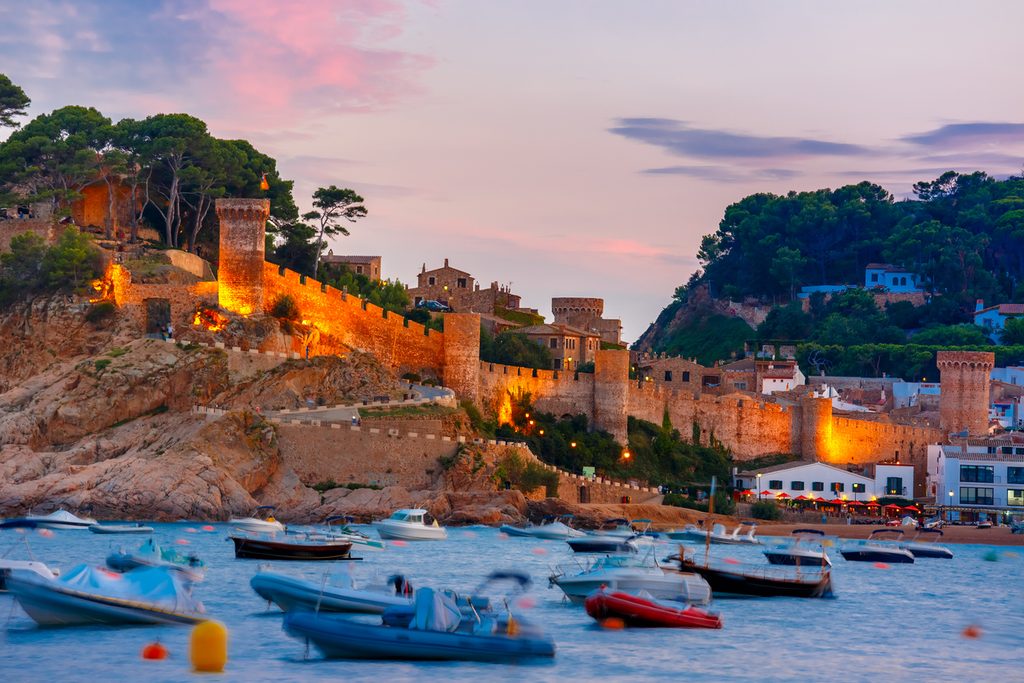
Tossa de Mar is one of my favorite options for a first visit. You get a beach plus a beautiful historic center and the medieval walls of Vila Vella rising above the water.
Cadaqués is another standout. The whitewashed town near Cap de Creus has long been associated with Salvador Dalí and feels very different from the larger resort towns farther south.
For something closer to Barcelona, look at places like Begur, Calella de Palafrugell and Llafranc.
I’d choose the Costa Brava for a romantic trip, scenic road trip or beach vacation where you don’t want to spend every day lying on the same stretch of sand.
Costa Brava Summer Fun: Exciting Activities Your Kids Will Love
Costa del Sol: Easy Beaches and Lots to Do
The Costa del Sol stretches along the Mediterranean coast of Málaga province and is one of Spain’s most established beach destinations.
It’s easy to understand why.
You have Málaga as a major city and transportation hub, plus beach destinations like Nerja, Marbella, Estepona and Fuengirola.
Marbella is the glamorous name everyone recognizes, particularly around Puerto Banús. But you don’t need a luxury budget to enjoy the Costa del Sol.
Nerja gives you a smaller-town atmosphere and some beautiful beaches backed by cliffs. Estepona has become one of my favorite alternatives for travelers who want the Costa del Sol without making Marbella the center of the trip.
Málaga itself is worth considering too.
You can spend the morning at the Picasso Museum or exploring the Alcazaba, have lunch in the historic center and still end the afternoon at the beach.
That’s one of the things I like most about this coast. You don’t have to choose between a cultural trip and a beach trip.
Best Costa del Sol Resorts: Top Luxury & Location Picks
Find Your Perfect Beach Getaway in Spain
Ready to turn all that beach inspiration into an actual trip?
Use the map below to explore places to stay along Spain’s coast and islands. Zoom in on the Costa Brava, Costa del Sol, Balearic Islands, Canary Islands or anywhere else that’s caught your eye.
Whether you’re looking for a beachfront resort, a boutique hotel in a coastal town or a quiet escape near a hidden cove, you can compare locations and find the right base for your Spain beach getaway.
Explore Beach Stays in Spain →
Costa Blanca: White Sand and Mediterranean Resorts
The Costa Blanca runs along Alicante province on Spain’s southeastern Mediterranean coast.
Alicante is the obvious gateway, but the coast includes a huge range of destinations.
Benidorm is the famous resort choice, with high-rise hotels, nightlife and long sandy beaches. It’s busy and developed, which some travelers love and others absolutely don’t.
For something different, look at Altea. Its whitewashed old town climbs above the Mediterranean and feels worlds away from Benidorm even though they’re relatively close.
Jávea and Dénia are also worth considering if you want beaches combined with a town where you’ll have plenty to do away from the water.
This coast is a good choice when you want a straightforward Mediterranean beach vacation with plenty of accommodations and restaurants.
Hit the Beach: Spain’s Ultimate Summer Bucket List
Costa de la Luz: Atlantic Andalucía
Cross over toward Cádiz and Huelva and the coastline changes.
The Costa de la Luz faces the Atlantic rather than the Mediterranean.
The beaches tend to feel broader and wilder, with sand dunes, wind and some spectacular sunsets.
Cádiz is one of my favorite choices because you’re getting an actual historic city surrounded by water. You can explore markets, eat incredible seafood and walk straight to the beach.
Farther south, Tarifa is famous for wind and water sports. On a clear day, you can look across the Strait of Gibraltar toward Morocco.
Places like Zahara de los Atunes and Bolonia are fantastic if your idea of a Spanish beach trip involves fewer high-rise resorts and more open coastline.
Bolonia is particularly interesting because you can combine the beach with the Roman ruins of Baelo Claudia.
Only in Spain can a beach day casually include a Roman archaeological site.
Costa Verde: Spain’s Green Northern Coast
If you picture Spain as dry, sunny and Mediterranean, the Costa Verde will surprise you.
Asturias’ coastline is green, rugged and dramatic.
Instead of palm-lined promenades and resort hotels, expect cliffs, mountains, little fishing villages and beaches surrounded by intensely green countryside.
Llanes makes a good base for exploring this part of northern Spain.
Playa del Silencio is one of the most photographed beaches in Asturias, while Playa de Gulpiyuri is unusual because it’s an inland beach connected to the sea through underground channels.
The weather is less predictable than southern Spain, even during summer.
That’s part of the tradeoff.
You come north for landscapes, seafood, cider and a slower coastal experience, not guaranteed Mediterranean sunshine.
Galicia: Wild Beaches and Atlantic Seafood
Keep traveling west and you reach Galicia.
The Galician coastline is filled with estuaries, rocky headlands, islands and long Atlantic beaches.
One of its most famous beach experiences is Playa de las Catedrales, known for enormous rock arches exposed around low tide.
Timing matters here. The landscape changes dramatically with the tide, and visitor access can be regulated during busy periods.
The Cíes Islands are another standout. They sit off the coast near Vigo and have striking white-sand beaches surrounded by protected landscapes.
But Galicia isn’t only about finding the prettiest beach.
Come here for seafood, Albariño wine, fishing towns and a coastline that feels completely different from southern Spain.
Spain’s Islands: Some of the Country’s Best Beaches
If beaches are one of the main reasons for your trip, don’t overlook Spain’s islands.
Mallorca
Mallorca is popular for a reason.
The island has everything from major resort beaches to tiny calas, the coves tucked between rocky cliffs that appear all over Instagram.
The key is getting beyond whichever resort happens to be closest to your hotel.
Explore the Serra de Tramuntana, spend time in Palma and seek out smaller coves along the coast.
Mallorca works particularly well when you want beautiful beaches but still want culture, restaurants, villages and road-trip possibilities.
Menorca
If Mallorca sounds too busy, look at Menorca.
The island is quieter and known for beautiful coves with clear turquoise water.
Places like Cala Macarella and Cala Mitjana show exactly why travelers fall in love with Menorca.
I’d choose it for a slower beach trip, particularly if you’re more interested in swimming, walking and small towns than nightlife.
Ibiza and Formentera
Ibiza’s reputation revolves around nightlife, but that’s only one side of the island.
There are beautiful coves, quieter villages and plenty to experience without setting foot inside a club.
Nearby Formentera takes the beach experience even further. Its pale sand and turquoise water can look almost Caribbean.
If I were planning a Balearic Islands trip primarily around beaches, I’d seriously consider combining Ibiza with a few days on Formentera.
Tenerife
The Canary Islands give you a completely different beach experience.
On Tenerife, volcanic geology means you’ll find dramatic black-sand beaches alongside lighter beaches and resort areas.
Playa de Benijo is particularly striking, with dark volcanic sand and dramatic rock formations offshore.
The island also gives you something the Mediterranean islands can’t: Teide National Park.
You can spend the day by the ocean and then head into a volcanic landscape for sunset and stargazing.
Fuerteventura
If your priority is simply beaches, Fuerteventura deserves serious consideration.
The island is known for enormous stretches of sand, clear water and excellent conditions for surfing and other water sports.
The dunes around Corralejo create one of the Canary Islands’ most distinctive coastal landscapes.
Fuerteventura feels much more open and desert-like than northern Spain or the Balearics.
That’s exactly the point.
10 Beaches in Spain Worth Putting on Your List
Trying to rank Spain’s beaches from one to ten is mostly an exercise in arguing about completely different kinds of beautiful.
But there are a few I’d put on a Spain beach shortlist.
Playa de Ses Illetes in Formentera is the one to look at if you’re dreaming of pale sand and turquoise water.
Playa de Rodas on the Cíes Islands combines white sand with Galicia’s protected Atlantic landscape.
Playa de Bolonia in Cádiz gives you dunes, a wide Atlantic beach and nearby Roman ruins.
In Asturias, Playa del Silencio is about dramatic scenery rather than resort amenities.
Playa de las Catedrales in Galicia is famous for the enormous rock formations visible around low tide.
On Mallorca, Cala Agulla combines clear Mediterranean water with a beautiful natural setting.
Cala Macarella in Menorca gives you the classic Balearic combination of turquoise water and limestone cliffs.
On Tenerife, Playa de Benijo stands out for its black volcanic sand and wild landscape.
Burriana Beach in Nerja is a great Costa del Sol choice when you want an easy beach day with restaurants and amenities nearby.
And La Concha in San Sebastián proves that a spectacular Spanish beach can sit right in the middle of one of the country’s best cities.
Beach Town or Beach City?
This is one of the first decisions I’d make.
If you want your trip to revolve around the beach, choose somewhere like Nerja, Menorca or one of the smaller Costa Brava towns.
But if you’re worried you’ll get bored after two days of lying in the sun, choose a city with a beach.
San Sebastián, Valencia, Málaga, Cádiz, Alicante and Barcelona all let you combine urban sightseeing with time by the water.
Personally, I love this combination.
Spend the morning exploring. Have a long lunch. Go to the beach later in the afternoon.
You get a beach vacation without having to make the beach your entire vacation.
When Is the Best Time for Beaches in Spain?
For most mainland Mediterranean destinations and the Balearic Islands, June through September is the main beach season.
July and August bring the hottest temperatures, biggest crowds and often the highest hotel prices.
If you have flexibility, I really like June and September.
You’ll still have warm weather in many coastal destinations without quite the same intensity of peak summer.
Northern Spain is less predictable. July and August generally give you the best chance for beach weather, but rain is always possible.
The Canary Islands are the exception. Their mild climate makes them a strong option when you want sunshine outside the traditional European summer season.
Which Coast in Spain Is Right for You?
If you want dramatic Mediterranean coves and pretty coastal towns, start with the Costa Brava.
For an easy combination of beaches, restaurants and excursions, choose the Costa del Sol.
If you want a classic resort vacation, look at the Costa Blanca.
For wild Atlantic beaches and Andalucía without the high-rise resort feel, I love the Costa de la Luz.
Go north to Asturias or Galicia for dramatic landscapes, seafood and a greener side of Spain.
Choose the Balearic Islands for some of Spain’s most beautiful Mediterranean water.
And head to the Canary Islands for volcanic landscapes, beaches and better odds of sunshine outside summer.
There really isn’t one “best” Spanish coast.
There is, however, probably one that’s best for the trip you’re imagining.
Plan Your Spain Beach Trip Without the Spreadsheet Chaos
Once you start combining coastal towns, islands and inland destinations, there are suddenly a lot of details to keep track of.
Flights. Ferries. Rental cars. Train tickets. Hotels. Beach days. Restaurant reservations. And all the little towns you decided you absolutely need to see after finding them online at midnight.
I created my Spain Travel Planner for Google Sheets to keep everything in one place.
Use it to organize your itinerary, transportation, reservations and activities while you’re planning and while you’re actually traveling.
Get the Spain Travel Planner for Google Sheets →
Not Sure Which Part of Spain Is Right for You?
Maybe you’re picturing tiny Mediterranean coves in Mallorca.
Maybe you’d rather eat seafood beside a wild Galician beach, combine museums with the beach in Málaga or spend a week exploring the Costa Brava.
Take my free Spain Travel Style Quiz and discover which Spanish destinations fit the way you actually like to travel.
Answer a few quick questions, and I’ll match you with the destinations, experiences, food, culture and little moments in Spain that suit your travel style.
Because your perfect Spain trip isn’t necessarily someone else’s.
Take the Free Spain Travel Style Quiz →
FAQs About Coasts and Beaches in Spain
What are some popular coastal places in Spain?
Popular coastal places in Spain include the Costa del Sol, Costa Brava, Costa Blanca, Mallorca, Menorca, Tenerife, Cádiz, San Sebastián and the Galician coast. Each area offers a different experience, from Mediterranean coves and resort towns to rugged Atlantic beaches and volcanic islands.
For a first beach trip, the Costa del Sol and Balearic Islands are easy choices. Northern Spain is better for travelers looking for greener landscapes and a less resort-focused coastal experience.
What are the top 10 beaches in Spain?
Ten of the best-known beaches in Spain include Playa de Ses Illetes, Playa de Rodas, Playa de Bolonia, Playa del Silencio, Playa de las Catedrales, Cala Agulla, Cala Macarella, Playa de Benijo, Burriana Beach and La Concha.
The best beach depends on your travel style. The Balearic Islands are known for turquoise Mediterranean coves, northern Spain has dramatic Atlantic scenery and the Canary Islands offer distinctive volcanic landscapes.
What are the cheapest coastal towns in Spain?
Some of Spain’s more affordable coastal destinations can be found in parts of Murcia, Almería, Galicia, Asturias and the Costa de la Luz. Towns away from internationally famous resorts like Marbella and Ibiza generally offer better-value accommodations, restaurants and long-term stays.
Prices vary considerably by season. Even traditionally affordable coastal towns can become much more expensive in July and August, so traveling in May, June, September or October can make a significant difference.
What is the prettiest part of Spain to visit?
Some of the prettiest parts of Spain include the Costa Brava, Mallorca, northern Spain, Andalucía and the Canary Islands. For beaches specifically, the Balearic Islands are known for turquoise coves, while Galicia and Asturias offer dramatic cliffs and green Atlantic landscapes.
If you want beautiful beaches combined with historic towns, I’d look particularly at the Costa Brava, Mallorca, Cádiz or the northern coast.
Accuracy note: Beach access, parking, ferry schedules, seasonal services, visitor limits and swimming conditions can change. Some protected beaches and islands may require advance reservations or have seasonal access restrictions. Always check current local information before making a special trip.
exploring:
Comments Off on Spain’s Most Beautiful Beaches & Coastal Towns to Visit