


You’ve booked your flights, found the perfect hotel, and started dreaming about tapas in Madrid. Then comes one of those practical questions every traveler eventually has to figure out:
How does money work in Spain?
Do you need euros before you arrive? Can you use your American credit card? How much cash should you carry? And when that little card machine asks whether you want to pay in dollars or euros, which one are you supposed to choose?
The good news is that dealing with money in Spain is pretty easy.
Cards are widely accepted, ATMs are easy to find, and you don’t need to arrive with an envelope stuffed with euros. But there are a few things worth knowing before you go, especially if you want to avoid unnecessary ATM fees and bad exchange rates.
Here’s my practical guide to Spain currency for tourists, including what money Spain uses, when you’ll need cash, how to use your cards, tipping, ATMs, and the money mistakes I’d avoid.
A quick note before we go: Some links in this post may be affiliate links, which means I may earn a small commission if you book or buy through them, at no extra cost to you. Think of it as helping fund my next café con leche while I keep bringing you the best Spain travel tips. I only share things I’d genuinely recommend for your trip.
What Currency Does Spain Use?
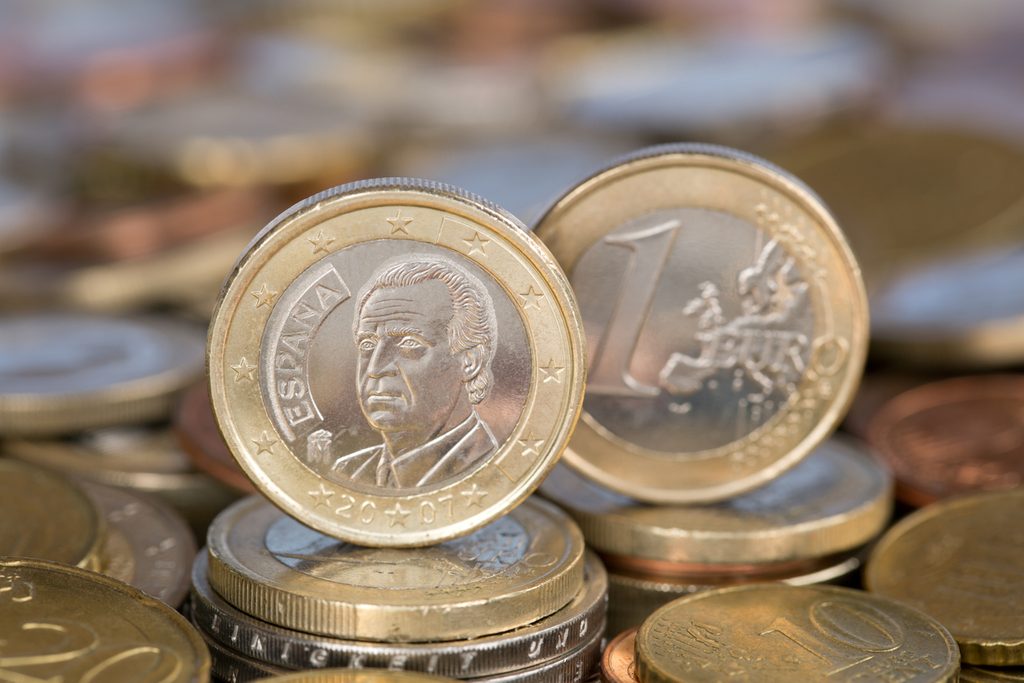
Spain uses the euro (€).
Spain adopted the euro along with many other European Union countries, which makes traveling between Spain and destinations like France, Italy, Portugal, Germany, and Greece much easier. You don’t have to exchange money every time you cross a border within the eurozone.
One euro is divided into 100 cents.
You’ll see euro coins in:
- 1, 2, 5, 10, 20, and 50 cents
- €1
- €2
Euro banknotes come in several denominations, including €5, €10, €20, €50, €100, €200, and €500.
For everyday travel, you’ll mostly be dealing with smaller bills and coins.
And don’t underestimate how useful those €1 and €2 coins can be. They’re easy to toss into the bottom of your bag and forget about, but they add up quickly.
Learn more: Do You Need Cash in Spain?
Yes, but probably not as much as you think.
Credit and debit cards are widely accepted throughout Spain, particularly in cities and popular tourist destinations. Spain’s official tourism website says physical cards and mobile payments, particularly Visa and Mastercard, are accepted at most shops, restaurants, hotels, and museums.
If you’re spending a week in Madrid and Barcelona, you could potentially go through most of your trip using a card.
Still, I always recommend having some euros in cash.
You might need them at a small café, market stall, neighborhood bar, rural business, or another place where cards aren’t accepted or where there’s a minimum purchase for card payments. Spain’s tourism authority notes that some businesses may require a minimum purchase of around €10 to use a card.
Cash also gives you a backup if your card doesn’t work for some reason.
You don’t need hundreds of euros stuffed into your wallet. Just having a small amount available makes life easier.
How Much Cash Should You Carry in Spain?
For most tourists, I wouldn’t carry a huge amount of cash around every day.
Something in the neighborhood of €50 to €100 is usually plenty for small purchases and emergencies, although how much you need depends on where you’re going and how you travel.
If you’re spending your entire trip in Madrid, Barcelona, Sevilla, or Valencia, you’ll probably use your card most of the time.
If you’re road-tripping through villages, visiting rural areas, shopping at markets, or getting farther away from major tourist destinations, keeping a little more cash available makes sense.
The Banco de España recommends a combination of cash and cards when traveling, noting that cash can be particularly useful for transportation, rural areas, and places where ATMs or card acceptance may be limited.
My approach is simple: carry enough cash that a card problem wouldn’t ruin your afternoon, but not so much that losing your wallet would ruin your entire vacation.
Should You Get Euros Before Traveling to Spain?
You don’t necessarily need to.
If having some euros in your wallet when you land makes you feel more comfortable, there’s nothing wrong with ordering a small amount through your bank before your trip.
But I wouldn’t exchange your entire vacation budget before leaving the United States.
You can easily find ATMs throughout Spain, including at airports, train stations, shopping areas, city centers, and tourist destinations.
Before exchanging money anywhere, pay attention to both the exchange rate and any fees being charged. An exchange counter advertising “no commission” doesn’t automatically mean you’re getting a great deal. The cost can be hidden in a less favorable exchange rate.
The Banco de España specifically recommends comparing both exchange rates and fees when converting currencies.
Learn more about Euros here: European Central Bank: Euro Coins
Can You Use US Dollars in Spain?
Generally, no.
The normal currency for purchases in Spain is the euro, and Spain’s official tourism authority notes that cash payments are generally made in euros.
Don’t arrive expecting restaurants, taxis, cafés, and shops to accept U.S. dollars.
Even if you encounter a tourist-oriented business willing to take dollars, there’s little reason to rely on it. You’re likely to have a much easier time using euros or paying by card.
Keep your dollars for when you get home.
Can You Use American Credit Cards in Spain?
Yes.
American credit cards are generally easy to use throughout Spain, particularly Visa and Mastercard.
You can use cards at hotels, restaurants, museums, stores, supermarkets, train stations, and most tourist attractions. Contactless payment is also widespread.
Before your trip, check whether your card charges a foreign transaction fee.
A 3% fee might not sound dramatic when you’re buying a €4 coffee and pastry. But apply it to hotels, restaurants, train tickets, shopping, and attractions for two weeks, and those little charges start adding up.
If you travel internationally regularly, having a card without foreign transaction fees can make a big difference.
It’s also smart to bring more than one card.
Don’t keep both in the same wallet. If one is lost, stolen, declined, or temporarily blocked, you’ll have another way to pay.
Banco de España: Using Cards Abroad
Credit Card or Debit Card in Spain?
I generally prefer a credit card for purchases and a debit card for ATM withdrawals.
A credit card can be useful for hotels, restaurants, attractions, train tickets, and everyday purchases.
Your debit card is useful when you actually need euros.
Before traveling, check your bank’s policies for:
- Foreign transaction fees
- International ATM fees
- Currency conversion fees
- Out-of-network ATM fees
Your bank may charge one fee, while the ATM operator in Spain charges another. Banco de España notes that ATM withdrawals can involve fees from both your own bank and the ATM’s owner.
Knowing your card’s rules before you leave can save you money and frustration.
The Most Important Card Tip: Always Pay in Euros
This is one of the most useful things to know about Spain currency for tourists.
You’re at a restaurant in Madrid. The server brings the card machine. You tap your American credit card.
Then the screen asks:
Pay in USD or EUR?
Choose EUR.
The same thing can happen at an ATM. It may offer to convert your withdrawal into U.S. dollars for you.
Again, you generally want to select euros and let your own card network or bank handle the currency conversion, assuming your card offers favorable terms.
The option to pay in your home currency is called dynamic currency conversion, or DCC.
It sounds convenient because you immediately see a familiar dollar amount. But that convenience can come with a less favorable exchange rate or additional costs.
European rules require currency-conversion providers to disclose the exchange rate, applicable fees, and markup so consumers can compare the options.
My rule in Spain is simple:
If the card machine asks dollars or euros, choose euros.
Using ATMs in Spain
ATMs are widely available in Spain, so you shouldn’t have trouble finding one in most destinations.
Whenever possible, I prefer using an ATM associated with an actual bank rather than grabbing cash from the first standalone machine I see in a tourist area.
Before completing a withdrawal, read the screen carefully.
The ATM should tell you about applicable fees before you complete the transaction, giving you the opportunity to cancel.
You may also see an offer to convert the withdrawal into dollars.
Just like with a card purchase, pay attention to who is performing the currency conversion and what rate you’re being offered.
Don’t mindlessly click “accept” just because you’re tired, jet-lagged, and there’s a line behind you.
Take five seconds and read the screen.
Those five seconds can save you money.
Should You Exchange Money at the Airport?
Airport currency exchanges are convenient.
And convenience usually has a price.
If you want a small amount of cash when you arrive, withdrawing euros from an ATM may be easier than exchanging a large amount of dollars at an airport currency counter.
If you do use a currency exchange, look beyond signs advertising “0% commission.”
What matters is how many euros you actually receive for your dollars after the exchange rate and all fees are taken into account.
Exchange providers can charge fees and set their own exchange rates, so compare the total transaction rather than focusing on one advertised number.
How Does Tipping Work in Spain?
This is where American travelers can relax a little.
Tipping is not obligatory in Spain.
Service is included in the price, so you don’t need to automatically add 20% to every restaurant bill.
Spain’s official tourism website says tipping is optional, although leaving something extra is common in restaurants, bars, hotels, and taxis when you’re happy with the service. It notes that tips may commonly fall around 5% to 10%, depending on the bill and the customer’s preference.
In casual situations, people may simply leave some coins or round up.
You don’t need to bring American tipping culture with you and start calculating percentages every time someone hands you a coffee.
If you’ve had excellent service and want to leave something, absolutely do.
But tipping in Spain is generally much more relaxed.
Can You Use Apple Pay and Contactless Payments in Spain?
Contactless payment is very common in Spain.
You’ll see people tapping physical cards and paying with phones throughout the country. Spain’s official tourism site confirms that mobile-phone card payments are accepted at many shops, restaurants, hotels, and museums.
That makes Apple Pay, Google Pay, and similar mobile wallets convenient options when your underlying card is supported.
Still, don’t make your phone your only payment method.
Phones die. Batteries disappear faster when you’re using Google Maps all day. Technology decides to stop working at exactly the wrong moment.
Carry a physical card and a little cash as backup.
What About American Express?
Visa and Mastercard are the safest cards to rely on because they’re widely accepted throughout Spain. Spain’s tourism authority specifically identifies both as commonly accepted card networks.
You may find businesses that accept American Express as well, particularly hotels, higher-end restaurants, major stores, and tourism businesses.
But I wouldn’t travel to Spain with Amex as my only card.
Bring a Visa or Mastercard backup.
How Much Do Things Cost in Spain?
This varies enormously depending on where you are and how you travel.
A trip built around luxury hotels and Michelin-starred restaurants in Barcelona or San Sebastián is going to look very different from one staying in modest hotels and eating menú del día lunches in smaller cities.
Even within the same city, you can spend €3 at one bar and €20 around the corner without trying very hard.
Rather than obsessing over an exact daily budget, think about your biggest categories:
Accommodation: Usually your largest expense.
Transportation: High-speed trains can add up if you’re moving between several cities.
Food: Spain gives you plenty of flexibility, from inexpensive cafés and tapas to tasting menus.
Attractions: Museums, palaces, guided tours, flamenco shows, and major attractions should be part of your budget.
Shopping: This is where things can go off the rails quickly. You’ve been warned.
Build your budget around the way you actually travel rather than someone else’s “Spain for $50 a day” challenge.
Don’t Forget About VAT Refunds
Here’s one money tip that’s especially useful if you plan on shopping.
Travelers who reside outside the European Union may be eligible to request a refund of VAT paid on qualifying purchases made during their trip.
You’ll need to follow the proper tax-free shopping process. In Spain, that includes requesting the electronic tax-free documentation from participating retailers and validating it when leaving the EU. You may need to present your passport, boarding pass, and the goods you purchased.
If you’re buying a significant item, ask the store about Tax Free before you pay.
Don’t wait until you’re standing at the airport to suddenly remember that you bought something expensive three cities ago.
Keep a Backup Payment Method
This is one of those boring travel tips you won’t appreciate until you need it.
Don’t travel with one debit card and nothing else.
Ideally, bring:
- A primary credit card
- A backup credit card
- A debit card for ATMs
- A small amount of euros
And don’t store everything together.
If your wallet disappears, you don’t want your primary card, backup card, debit card, and every euro you brought disappearing with it.
Keep one backup card somewhere secure and separate from your everyday wallet.
Tell Your Bank You’re Traveling If Necessary
Many banks no longer require travel notifications because their fraud systems automatically recognize international transactions.
But don’t assume yours works that way.
Before leaving, open your banking app and check.
It’s also worth making sure you know how to temporarily freeze your cards, contact your bank from abroad, and access your account if something goes wrong.
And make sure your bank has your current phone number.
Getting locked out of your account because you can’t receive a security code is not how you want to spend your first morning in Madrid.
Money Safety in Spain
Spain is generally straightforward when it comes to using money, but basic travel precautions still matter.
Don’t carry your entire vacation budget in cash. Don’t flash large amounts of money around when paying. And be particularly mindful of your wallet and phone in crowded tourist areas and on public transportation.
Barcelona’s busiest attractions, Madrid’s central tourist areas, crowded metros, train stations, and festivals are exactly the kinds of places where you should pay extra attention to your belongings.
You don’t need to be paranoid.
Just don’t make yourself an easy target.
My Ideal Money Setup for Spain
If I were putting together a wallet specifically for a Spain trip, I’d keep it simple.
I’d bring a credit card with no foreign transaction fees as my primary payment method, a second card as backup, and a debit card with reasonable international ATM fees.
I recommend withdrawing a small amount of euros for cash purchases rather than carrying a huge amount.
I’d use cards for hotels, train tickets, attractions, shopping, and most restaurant meals.
I’d use cash for small purchases and situations where it’s simply easier.
And whenever a machine asked whether I wanted to pay in dollars or euros?
Euros. Every time.
It’s a simple setup, and it means you don’t have to spend your vacation constantly thinking about money.
Spain Currency for Tourists: What to Remember
Understanding Spain currency for tourists sounds more complicated before your trip than it feels once you’re actually there.
Spain uses the euro, cards are widely accepted, ATMs are easy to find, and you don’t need to exchange a huge amount of money before leaving the United States.
Bring a little cash, use a card without foreign transaction fees if you have one, and keep a backup payment method somewhere safe.
Most importantly, pay attention when you’re given a choice between dollars and euros. Choosing euros lets you avoid accepting a merchant or ATM’s currency conversion without checking its rate.
Once you’ve figured that out, stop worrying about it.
You’ve got much more important financial decisions to make.
Like whether ordering another plate of croquetas technically counts as part of the food budget.
It does.
Frequently Asked Questions About Money in Spain
What currency does Spain use?
Spain uses the euro (€) as its official currency. One euro is divided into 100 cents. Euros are also used in many other European countries, including France, Italy, Portugal, Germany, Greece, and Ireland.
Should I bring cash to Spain?
Yes, tourists should carry a small amount of euros in Spain even though credit and debit cards are widely accepted. Cash can be useful for small purchases, markets, rural areas, and businesses that don’t accept cards or have minimum card-purchase requirements.
Is it better to use cash or a card in Spain?
A combination of cards and cash is usually the most convenient option for tourists in Spain. Cards are widely accepted at hotels, restaurants, museums, shops, and attractions, while cash is useful for smaller purchases and as a backup.
Should I pay in dollars or euros when using my card in Spain?
Choose euros when a card terminal or ATM in Spain asks whether you want to pay in U.S. dollars or euros. Choosing dollars uses a currency-conversion service offered at the point of sale or ATM, which may include its own exchange rate and fees. Always review the conversion terms before accepting them.
Do I need to exchange money before traveling to Spain?
You don’t need to exchange a large amount of money before traveling to Spain. ATMs are widely available throughout Spanish cities, airports, stations, shopping centers, and tourist areas. Some travelers prefer arriving with a small amount of euros for convenience.
Are credit cards widely accepted in Spain?
Yes, credit and debit cards are widely accepted in Spain, particularly Visa and Mastercard. Cards and mobile payments are commonly accepted at shops, restaurants, hotels, museums, and other tourism businesses.
Do you tip in Spain?
Tipping is not obligatory in Spain, although travelers may leave a small tip for good service. Spain’s official tourism authority says tipping is common in restaurants, bars, hotels, and taxis, with the amount left to the customer’s discretion.
Last updated: October 2026. Exchange rates, bank fees, card policies, and payment practices can change. Check your bank’s international fees and current exchange rates before traveling.
Further Reading
Spain Entry Requirements for Americans: Your Complete 2027 Guide
The Best Travel Adapters for Europe
The Essential Safety Items for Solo Female Travelers



Be the first to comment