


Barcelona is one of those cities where getting around is surprisingly easy once you understand your options. Many of the neighborhoods visitors spend the most time in are wonderfully walkable, and when your feet need a break, the city’s Metro, buses, trains, trams, and taxis can take you almost anywhere you want to go.
In fact, you probably don’t need to rent a car at all.
So, what is the best way to get around Barcelona for tourists? For most visitors, the answer is a combination of walking and public transportation. Use the Metro for longer distances, walk once you reach the neighborhood you want to explore, and add buses, taxis, or trains when they make sense for a particular destination.
This guide breaks down your transportation options, which tickets are worth considering, how to get into Barcelona from the airport, and a few practical tips that can make navigating the city much easier.
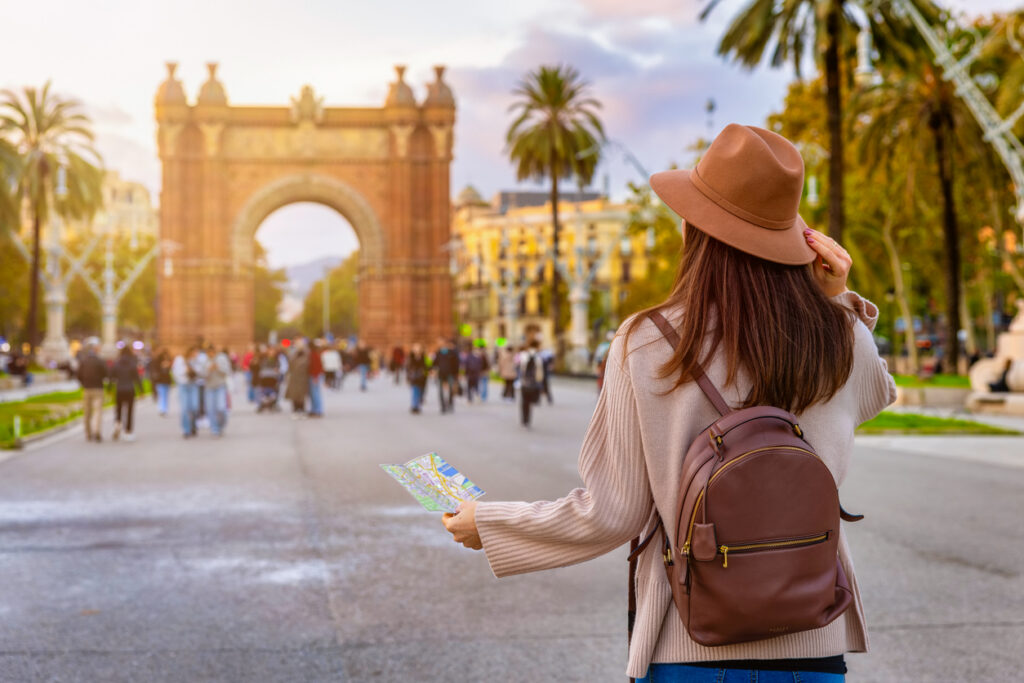
Is Barcelona Easy to Get Around Without a Car?
Yes. Barcelona is an excellent city to visit without renting a car.
The city’s major attractions are spread across several neighborhoods, but Barcelona has an extensive public transportation network connecting them. Once you’re within an individual neighborhood, walking is often the easiest and most enjoyable way to explore.
For example, you can spend hours walking around the Gothic Quarter, El Born, and the areas surrounding La Rambla without needing transportation. But you probably won’t want to walk from the Gothic Quarter all the way to Park Güell and then over to the Sagrada Família.
That’s where Barcelona’s Metro and buses become useful.
For most travelers, the best way to get around Barcelona for tourists is to think of the city in sections. Take public transportation to the general area you want to visit, then explore that neighborhood on foot.
1. Walking: The Best Way to Experience Barcelona’s Neighborhoods
Walking should be a major part of almost any Barcelona itinerary.
Some of the city’s most memorable places aren’t individual attractions at all. They’re streets, plazas, markets, cafés, architecture, and little corners you stumble across while walking between destinations.
The Gothic Quarter is particularly well suited to exploring on foot. Its narrow medieval streets lead to small plazas, historic buildings, shops, restaurants, and bars.
Nearby El Born is another neighborhood where walking is part of the experience.
The Eixample is much more orderly, with its recognizable grid pattern and wide avenues. Passeig de Gràcia runs through the neighborhood and is home to famous Modernist architecture, including Casa Batlló and La Pedrera.
Walking also works well along the waterfront and through Barceloneta.
But Barcelona is bigger than it sometimes looks on a map. Attractions such as Park Güell, Montjuïc, and the Sagrada Família can involve significant walking if you’re coming from another part of the city.
A good rule is simple: walk within neighborhoods and use public transportation between neighborhoods.
2. Barcelona Metro: Usually the Fastest Option
If you’re trying to cover a lot of Barcelona in a few days, the Metro will probably become your most-used form of transportation.
Barcelona’s Metro connects many of the areas tourists visit most frequently, and it can save a huge amount of time compared with walking across the city.
Stations are marked clearly, and the individual Metro lines are identified by both numbers and colors.
The Metro is particularly useful when traveling between areas such as:
- Plaça de Catalunya and the Sagrada Família
- The Gothic Quarter and Park Güell
- Passeig de Gràcia and Plaça d’Espanya
- Barcelona Sants railway station and central Barcelona
- The city center and neighborhoods farther from the historic core
If your priority is efficiency, the Metro is often the best way to get around Barcelona for tourists who want to see several major attractions during the same day.
Before getting on a train, check the line number and the final station in the direction you’re traveling. That makes it much easier to determine which platform you need.
And don’t worry if you occasionally get on the wrong train. Get off at the next station, switch directions, and continue your trip.
3. Barcelona Buses: Better for Seeing the City
The Metro is usually faster, but buses have one major advantage: you can actually see Barcelona while you’re traveling.
Barcelona’s bus network reaches neighborhoods and attractions throughout the city, including places that aren’t directly beside a Metro station.
Buses can be especially convenient if you don’t want to walk as far between a Metro station and your destination.
They’re also useful when traveling with children, older family members, or anyone who finds stairs and long underground station transfers difficult. According to TMB, Barcelona’s bus network is 100% accessible.
For visitors, buses can take a little more planning than the Metro because there are many different routes. A navigation app makes the process much simpler. Enter your destination, check the recommended bus number and stop, and follow your progress during the trip.
4. Metro or Bus: Which Is Better in Barcelona?
You don’t really need to choose one.
Most visitors will use both.
Choose the Metro when you want to travel a longer distance quickly. Choose the bus when there’s a convenient direct route or when you’d rather stay above ground and see the city.
That’s why the best way to get around Barcelona for tourists isn’t necessarily one particular form of transportation. Barcelona works best when you combine different options depending on where you’re going.
For example, you might take the Metro to the Sagrada Família in the morning, walk through the surrounding neighborhood, take a bus toward Park Güell, and later use the Metro to return to your hotel.
5. What Transportation Pass Should Tourists Buy in Barcelona?
This is where Barcelona transportation can get a little confusing.
There are several types of tickets, and the right one depends on how often you expect to use public transportation.
One option for visitors is the Hola Barcelona Travel Card. It provides unlimited travel for a specified period and covers the Metro, TMB buses, the Montjuïc funicular, TRAM, FGC in Zone 1, and Rodalies commuter trains in Zone 1. It also includes Metro travel between Barcelona-El Prat Airport and the city.
Cards are available for periods ranging from 24 to 120 hours.
For travelers who plan to use public transportation frequently, the unlimited format is convenient because you don’t have to count individual trips.
Another option is the T-casual, which provides 10 journeys. In 2026, a one-zone T-casual costs €13. It’s a good option for someone who expects to walk extensively and use public transportation only when necessary.
There is one important airport exception: the T-casual is not valid at the Aeroport T1 and Aeroport T2 Metro stations on the L9 Sud line.
Single Metro/bus tickets are also available, but at €2.90 for a one-zone single ticket in 2026, purchasing individual tickets repeatedly can become more expensive than using a multi-journey ticket.
6. Getting From Barcelona Airport to the City
Barcelona-El Prat Airport is connected to the city by several transportation options.
One of the most straightforward is Metro Line L9 Sud, which serves both Terminal 1 and Terminal 2.
According to TMB, trains run approximately every seven minutes, and the airport journey on L9 Sud takes about 32 minutes. The line connects with other Metro lines at stations including Torrassa, Collblanc, and Zona Universitària.
One thing tourists should understand is that the airport Metro has special ticket rules.
A standard T-casual cannot be used at the Aeroport T1 or Aeroport T2 stations. The dedicated Airport Ticket costs €5.90 in 2026. Some other passes, including the Hola Barcelona Travel Card and T-dia, include airport Metro access.
Depending on where you’re staying, you may also find an airport bus, train, or taxi more convenient.
For travelers with several suitcases, small children, or a late arrival, paying more for a taxi can sometimes be worth it simply for the door-to-door convenience.
7. Taxis in Barcelona
Taxis are easy to recognize in Barcelona because licensed taxis are black and yellow.
They’re useful when you’re carrying luggage, traveling late at night, heading somewhere that requires multiple public transportation connections, or simply exhausted after walking all day.
Barcelona’s metropolitan taxi fares are regulated. In 2026, the standard weekday daytime tariff starts at €2.80 and then charges €1.35 per kilometer, with different rates applying at other times. Additional supplements can apply to trips involving locations such as the airport, cruise port, or Sants station.
For two or more people, a taxi can occasionally make sense even when public transportation is available, especially for a short trip.
That doesn’t make taxis the best way to get around Barcelona for tourists for every journey, but they’re a useful option to have when convenience matters more than saving a few euros.
8. Tourist Bus: Worth It or Not?
Barcelona also has a hop-on, hop-off tourist bus.
This isn’t necessarily the most economical way to get from Point A to Point B, but that’s not really its purpose.
The Barcelona Bus Turístic is designed for sightseeing. For first-time visitors, it can provide a convenient overview of the city while connecting major attractions.
It may be especially appealing if you have limited time, don’t want to navigate the regular public transportation system, or are traveling with someone who can’t comfortably spend an entire day walking.
However, if you’re staying in Barcelona for several days and are comfortable navigating the Metro, regular public transportation will generally give you more flexibility for everyday travel.
9. Getting Around Barcelona by Bike
Barcelona can also be explored by bicycle, although cycling makes more sense for some visitors than others.
A bike can be a fun way to explore the waterfront and flatter parts of the city, and guided bike tours are a popular way to combine transportation with sightseeing.
However, cycling probably shouldn’t be your only transportation plan unless you’re already comfortable riding in an unfamiliar city.
Barcelona has busy roads, pedestrians, intersections, and traffic patterns that can feel overwhelming if you’re simultaneously trying to follow directions.
Consider cycling an experience rather than your primary transportation strategy.
10. How to Get Around Barcelona With Kids
Families can use essentially the same transportation strategy as other tourists: Metro, buses, and walking.
The difference is that you may want to be less ambitious about how much ground you cover on foot.
A distance that seems perfectly reasonable to adults at 9 a.m. can feel very different after children have spent six hours visiting attractions.
This is another reason unlimited transportation can be convenient. You won’t find yourself debating whether a short Metro or bus ride is “worth using a ticket” when everyone is tired.
The bus can also be a particularly useful alternative for families because you stay above ground and don’t have to navigate as many stairs or station corridors.
For families, the best way to get around Barcelona for tourists is often whichever option reduces unnecessary walking without making the itinerary more complicated.
11. Is Renting a Car in Barcelona Worth It?
For a typical city vacation, probably not.
Barcelona’s public transportation system eliminates most of the reasons you would need a rental car within the city.
Driving also creates additional concerns, including parking, traffic, unfamiliar streets, and restrictions on where vehicles can go.
If you’re planning a larger road trip through Catalonia or Spain, renting a car may make sense for the portion of the trip outside Barcelona. But you may find it easier to pick up the car when you’re ready to leave the city rather than keeping it during your Barcelona stay.
If you’re only visiting Barcelona itself, you can comfortably build an entire itinerary without driving.
12. Don’t Forget Barcelona’s Trains
Barcelona’s rail network becomes particularly useful when you start traveling beyond the central tourist areas.
Rodalies commuter trains connect Barcelona with destinations throughout the surrounding region, while FGC trains serve additional routes within Barcelona and Catalonia.
Long-distance and high-speed trains also make Barcelona a convenient starting point for visiting other Spanish cities.
Barcelona Sants is the city’s main railway station and connects easily with the local Metro system.
If you’re planning a day trip, always check whether a train is faster than trying to reach the destination by bus.
13. What Is the Cheapest Way to Get Around Barcelona?
Walking is obviously free, which makes the combination of walking plus a multi-journey transportation ticket one of the cheapest ways to explore Barcelona.
If you’re comfortable walking several miles per day, you may not need unlimited transportation.
A traveler staying centrally might walk around the Gothic Quarter, El Born, Eixample, and the waterfront and use the Metro only for destinations farther away.
In that situation, a 10-journey T-casual may make more financial sense than an unlimited tourist pass.
On the other hand, if your itinerary involves several Metro or bus trips every day, an unlimited option may offer better value and more convenience.
The best way to get around Barcelona for tourists on a budget therefore depends on how you travel, not simply which ticket has the lowest advertised price.
14. How to Plan Your Transportation Each Day
One of the easiest ways to waste time in Barcelona is to create an itinerary that has you constantly crossing the city.
Instead, group attractions by neighborhood.
You could spend one day around the Gothic Quarter, El Born, and Barceloneta. Another day could focus on the Sagrada Família and nearby Modernist sights. Another could include Park Güell and Gràcia.
Grouping attractions reduces transportation time and gives you more opportunities to experience the neighborhoods rather than spending your vacation moving between them.
It also makes using public transportation much easier. Instead of taking five or six long journeys throughout the day, you might take the Metro to a neighborhood, spend several hours walking around, and then take public transportation back.
15. Practical Tips for Using Barcelona Public Transportation
A few simple habits make getting around much easier:
- Keep your transportation ticket accessible until your journey is completely finished.
- Check the Metro line number and direction before boarding.
- Use a navigation app to plan unfamiliar bus routes.
- Watch your belongings in crowded stations and trains.
- Avoid standing directly in front of train doors when other passengers are trying to exit.
- Allow extra time when traveling to the airport or catching a train.
- Wear comfortable shoes even if you plan to use public transportation.
- Check current transportation schedules when traveling very early or late.
Barcelona’s public transportation system may look complicated on a map, but after your first few trips, it becomes much easier to navigate.
So, What Is the Best Way to Get Around Barcelona for Tourists?
For the average visitor, don’t choose just one method.
Walk as much as you comfortably can. Barcelona’s streets and neighborhoods are part of what makes the city worth visiting in the first place.
Use the Metro when you need to cover significant distances quickly. Take buses when they provide a convenient direct route or you want to see more of the city along the way. Use taxis when you have luggage, you’re out late, or convenience is worth the additional cost.
And unless you’re planning excursions that genuinely require one, skip the rental car.
Ultimately, the best way to get around Barcelona for tourists is a combination of walking and Barcelona’s excellent public transportation system. Once you stop thinking about transportation as an either-or decision, navigating Barcelona becomes remarkably simple.
Frequently Asked Questions About Getting Around Barcelona
What is the easiest way for tourists to get around Barcelona?
For most tourists, the easiest option is combining the Metro with walking. Take the Metro between neighborhoods and explore individual areas on foot.
Do tourists need a car in Barcelona?
No. Most visitors do not need a rental car in Barcelona. The city has extensive public transportation, and many central neighborhoods are highly walkable.
Is the Barcelona Metro easy for tourists?
Yes. The Metro is relatively straightforward once you understand the numbered and color-coded lines. Check both the line and the direction of travel before boarding.
What is the best transportation pass for Barcelona?
It depends on how often you’ll use public transportation. The T-casual provides 10 journeys and can work well for visitors who walk frequently. The Hola Barcelona Travel Card provides unlimited public transportation for a set period and includes Metro transportation to and from the airport.
Can I use the T-casual from Barcelona Airport?
Not on the L9 Sud Metro stations at Terminal 1 or Terminal 2. You’ll need an airport-valid ticket or pass for those stations.
How much is the Barcelona Metro in 2026?
A one-zone single ticket costs €2.90 in 2026. A one-zone T-casual with 10 journeys costs €13. The dedicated airport Metro ticket costs €5.90.
Is Barcelona a walkable city?
Yes. Barcelona is very walkable, particularly in neighborhoods such as the Gothic Quarter, El Born, Eixample, Gràcia, and Barceloneta. However, the city is large enough that most visitors will want to combine walking with public transportation.
What is the best way to get from Barcelona Airport to the city?
The L9 Sud Metro connects both airport terminals with Barcelona’s Metro network. Other options include buses, trains, and taxis. The most convenient choice depends on where you’re staying, how much luggage you have, and how many people are traveling with you.
Is public transportation safe in Barcelona?
Millions of residents and visitors use Barcelona’s public transportation system. As in other major tourist destinations, pay particular attention to your belongings in crowded trains, stations, and tourist areas.
Is it cheaper to use a taxi or Uber in Barcelona?
Prices vary depending on the trip and demand, but Barcelona’s licensed taxis have regulated fares, while ride-hailing prices can vary. For most sightseeing trips, public transportation will be significantly cheaper than either option. Taxis can still be a convenient choice when traveling with luggage, late at night, or with several people who can split the fare.
Do and don’ts in Barcelona?
Do use public transportation, wear comfortable shoes, keep an eye on your belongings in crowded tourist areas, and learn a few basic words in Catalan or Spanish. Don’t assume you need a rental car, leave valuables unattended, or expect every restaurant and business to follow the same schedule you’re used to at home. It’s also worth remembering that Barcelona is a lived-in city, not just a tourist destination, so be respectful in residential neighborhoods and keep noise down at night.
How do you say “hi” in Barcelona?
You can say “hola” in both Spanish and Catalan, the two main languages you’ll encounter in Barcelona. You’ll also hear the Catalan “bon dia,” meaning “good morning” or “good day.” You don’t need to speak Catalan to visit Barcelona, but learning a few basic words and phrases can be a nice gesture.
Is Barcelona friendly to Americans?
Yes. Barcelona welcomes millions of international visitors, and American tourists should generally feel comfortable visiting the city. English is commonly encountered
Final Thoughts
Barcelona is a city that rewards walking, but trying to walk everywhere can quickly become exhausting. Fortunately, you don’t have to.
For most visitors, the best way to get around Barcelona for tourists is simple: use the Metro and buses to cover longer distances, then walk once you arrive in the neighborhood you want to explore.
Learn the basic Metro system, choose a transportation ticket that matches the way you travel, bring comfortable shoes, and organize your itinerary geographically.
You’ll spend less time figuring out how to get somewhere and more time actually experiencing Barcelona.
Further Reading
Where to Store Luggage in Barcelona—Smart, Easy, Done
Three Day Barcelona Itinerary That Covers Everything You Actually Want
The Top Barcelona Rooftops and Bars for Sagrada Familia Views



Be the first to comment