
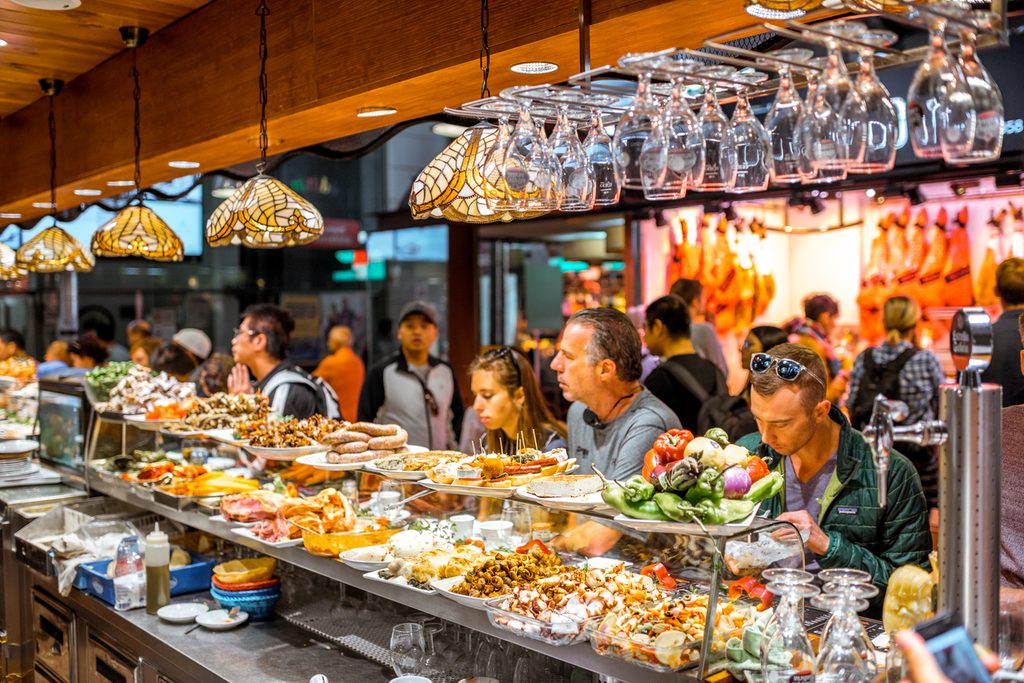
If there’s one Spanish food tradition you need to experience, it’s tapas.
But tapas in Spain aren’t quite what many travelers expect.
They’re not one specific kind of food. You don’t necessarily order a giant table full of tiny plates. And you definitely shouldn’t expect every bar in Spain to hand you free food with your drink.
Tapas are as much about how you eat as what you eat.
You order something small. Have a drink. Talk. Maybe order another dish. Then you might move on to another bar.
That’s ir de tapas, and it’s one of my favorite ways to experience Spain.
A quick note before we go: Some links in this post may be affiliate links. I may earn a small commission if you book through them, at no extra cost to you. It helps fund my next café con leche and keeps the Spain travel tips coming. I only recommend things I’d genuinely choose for my own trip.
What Are Tapas in Spain?
A tapa is a small portion of food served alongside a drink or ordered as part of a meal. It can be as simple as olives, cheese or jamón. It can also be something hot, like croquetas, tortilla española or patatas bravas.
The important thing to understand is that tapas aren’t really a cuisine of their own. They’re a way of eating, which is why you’ll find completely different dishes as you travel around Spain.
In Galicia, that might mean octopus and seafood. Andalucía brings plenty of fried fish, jamón and regional dishes. Head north to the Basque Country and the experience changes again with pintxos.
That’s one of the things I love about eating around Spain. You don’t have to seek out the same “famous Spanish tapas” everywhere you go.
How Tapas Actually Work in Spain
There isn’t one universal tapas system, and that’s where visitors sometimes get confused. At one bar, you might order individual tapas from a menu. At another, your drink could arrive with a complimentary tapa.
Some restaurants also offer several sizes of the same dish. You’ll usually see tapa, media ración and ración on the menu.
A tapa is the smallest portion. A media ración is roughly a half portion, while a ración is a larger plate meant for sharing. The exact sizes vary, so don’t worry too much about trying to calculate how much food you’re getting.
If you’re with several people, ordering a few raciones for the table often makes sense. If you want to taste as many dishes as possible, stick with smaller tapas.
Are Tapas Free in Spain?
Sometimes, but definitely not everywhere.
Granada is famous for its tradition of serving a tapa with your drink, and it’s one of the things I love about going out there. Other cities and regions have their own traditions, and the size and type of complimentary tapa can vary.
In many parts of Spain, you’ll simply order and pay for tapas separately. So if you order a beer in Barcelona and nobody brings you a plate of food, nothing has gone wrong.
The tapas experience changes depending on where you are.
Traditional Tapas to Try in Spain
You could spend an entire trip eating tapas and still barely scratch the surface. There are countless regional dishes, but a few classics are worth knowing before you arrive.
Tortilla Española
Spanish tortilla is made with eggs, potatoes and olive oil. Onion is common too, although whether it belongs there is the kind of debate that can get surprisingly serious in Spain.
You’ll often see tortilla cut into slices and served as a pincho de tortilla. It’s simple, filling and one of those dishes I could happily eat again and again.
And yes, it’s completely different from a Mexican tortilla.
Patatas Bravas
Patatas bravas are fried potatoes served with a spicy or slightly smoky bravas sauce. The exact preparation changes depending on the bar and region.
They’re inexpensive, easy to share and one of the first tapas I’d suggest trying. They’re also a good example of how such a simple dish can inspire strong opinions about which bar does it best.
Croquetas
Croquetas are another staple you’ll find all over Spain. Croquetas de jamón are probably the classic choice, but fillings can include cod, mushrooms, prawns, chicken and different cheeses.
A good croqueta should be crisp outside and creamy inside. They’re also dangerously easy to keep ordering.
Jamón Ibérico
You can’t talk about tapas in Spain without talking about jamón. Good jamón ibérico is sliced incredibly thin and usually served without much else because it doesn’t need it.
If you’ve only tried packaged Spanish ham outside Spain, make a point of ordering the real thing while you’re there. It’s a completely different experience.
Gambas al Ajillo
Gambas al ajillo are prawns cooked in olive oil with plenty of garlic. They often arrive at the table still sizzling in a small dish.
Make sure you have some bread nearby because you’re going to want it for the garlicky olive oil left at the bottom.
Calamares
Fried calamari appears on menus throughout Spain, but Madrid has its own particularly beloved version: the bocadillo de calamares.
It’s basically fried squid tucked into bread. It sounds incredibly simple because it is, but that’s part of the appeal.
Aceitunas
Don’t overlook the olives. They might arrive with a drink or appear as one of the simplest things on the menu, but Spanish olives can be fantastic.
You’ll find different varieties, marinades and preparations depending on where you are. Sometimes the simplest thing on the table ends up being one of the best.
Don’t Order the Same Tapas Everywhere
One of my biggest pieces of advice is to avoid finding five tapas you recognize and ordering them everywhere you go. Spain’s regional food is too good for that.
In Andalucía, look for pescaíto frito, salmorejo, jamón and seafood. In Galicia, try pulpo a feira, empanada and whatever seafood is local. In Catalonia, order pa amb tomàquet, bread rubbed with tomato and dressed with olive oil and salt.
Then there’s the Basque Country, where pintxos become a huge part of the experience. Let what you eat change with where you’re traveling. It’s one of the easiest ways to experience Spain’s regional differences.
What’s the Difference Between Tapas and Pintxos?
You’ll hear both words while traveling in Spain, but they’re not always interchangeable. Pintxos are especially associated with the Basque Country, particularly cities like San Sebastián and Bilbao.
Traditionally, pintxos are small portions or bites, often served on bread. Modern pintxo bars have taken the idea much further, and some of the dishes can be surprisingly elaborate.
One of the classics is the gilda, usually made with an anchovy, olive and pepper. But part of the fun is walking into a bar and seeing what’s on the counter.
If you’re visiting San Sebastián, don’t treat pintxos as something you try once and move on from. Make an evening of it. Then do it again.
Where Are the Best Places for Tapas in Spain?
You can eat tapas throughout Spain, but some destinations have particularly strong traditions.
Granada is famous for serving tapas with drinks, while Madrid has seemingly endless traditional taverns and neighborhood bars. Seville is one of my favorite places for moving between bars and trying Andalusian dishes.
Logroño is another great choice, especially if you love wine. Calle Laurel is packed with bars where you can move from place to place, pairing small dishes with Rioja.
And then there’s San Sebastián. Technically, we’re talking pintxos here, but if food is one of the main reasons you travel, this city deserves a place on your Spain itinerary.
Should You Take a Tapas Tour in Spain?
A tapas tour is one food experience I genuinely think can be worth booking. Not because ordering tapas is difficult, but because a good guide can show you where to go and what to order.
This can be especially useful in cities with hundreds of bars. Instead of ending up at the obvious tourist spots, you’ll get an introduction to local dishes and learn a little about the food culture along the way.
I’d consider booking one during your first night or two in a city. You’ll understand how the local tapas scene works and probably leave with several places you want to return to later.
Try This Barcelona Tapas Tour
I like the Barcelona: Tapas Walking Tour with Food, Wine, and History because it gives you more than a list of places to eat. You’ll try different tapas and Spanish wines while learning about Barcelona’s history and food culture along the way.
It’s the kind of tour I’d book early in a trip. You’ll get comfortable with the local tapas scene and hopefully discover a few bars you’ll want to return to on your own.
Check Availability for the Barcelona Tapas Tour →
What Should You Drink With Tapas?
Beer and wine are classic choices with tapas. For beer, order una caña, a small draft beer that’s perfect when you’re hopping between bars.
In warmer weather, try tinto de verano, red wine mixed with lemon soda or gaseosa over ice. It’s refreshing, casual and much more of an everyday Spanish drink than many visitors realize.
Vermouth is another favorite, especially before lunch. You can also try what’s local, like sherry in Andalucía, txakoli in the Basque Country or cider in Asturias.
And don’t feel like you need to order sangria everywhere. A caña or tinto de verano often feels much more like what you’d actually order at a neighborhood tapas bar.
How to Eat Tapas Without Overthinking It
You don’t need to memorize a complicated set of tapas rules before walking into a bar. Watch what everyone else is doing and follow their lead.
If people are standing at the counter, you can probably do the same. If everyone is sitting with menus, grab a table. Some places are loud and crowded, while others feel much more like regular restaurants.
Spain also eats later than many international visitors are used to. Tapas can be something small before dinner, but they can just as easily become dinner if you keep ordering.
Most importantly, don’t rush it. Tapas aren’t supposed to feel like checking dishes off a food bucket list. Have something to eat, enjoy your drink and spend some time together. Then head somewhere else if you feel like it.
That’s really the experience.
How to Order Tapas in Spain
You don’t need perfect Spanish to order tapas, but a few phrases will make the experience much easier.
One you’ll hear all the time is “¿Me pones…?”, which literally means “Will you put me…?” but is a completely natural way to order. Try “¿Me pones una caña?” for a small beer or “¿Me pones una de croquetas?” for an order of croquetas.
You can also say “Quería…” followed by what you’d like. To ask what the server recommends, try “¿Qué me recomiendas?” And when you’re ready to pay, “La cuenta, por favor” does the job.
Beyond that, follow the room. If people are ordering at the bar, do the same. If everyone is sitting with menus, grab a table.
And don’t rush. Order a drink and something to eat, enjoy it, then decide whether you want another round or another bar. That’s really the tapas experience.
Plan Your Spain Trip Without the Spreadsheet Chaos
Once you’re planning restaurants, food tours, hotels, transportation and sightseeing, the details start adding up quickly.
I created my Spain Travel Planner for Google Sheets to keep everything in one place. Use it to organize your itinerary, reservations, transportation and activities without scattering everything across emails, screenshots and notes.
And yes, you can absolutely use it to keep track of all the tapas bars you don’t want to forget.
Get the Spain Travel Planner for Google Sheets →
Not Sure Which Part of Spain Is Right for You?
Food can tell you a lot about where you should go. Maybe you’re dreaming about pintxos in San Sebastián, tapas nights in Madrid or seafood along the Andalusian coast.
Take my free Spain Travel Style Quiz and find out which Spanish destinations fit the way you love to travel. Answer a few quick questions, and I’ll match you with the destinations, experiences, food, culture and little moments in Spain that suit your travel style.
Because your perfect Spain trip isn’t necessarily someone else’s.
Take the Free Spain Travel Style Quiz →
FAQs About Tapas in Spain
What are traditional tapas in Spain?
Traditional tapas in Spain include tortilla española, patatas bravas, croquetas, jamón ibérico, olives and calamari. The dishes vary by region, with seafood, fried fish, cheeses and other local specialties appearing throughout the country.
Tapas can be hot or cold and range from simple snacks to more substantial dishes.
What are the three types of tapas?
Tapas are often described as cold tapas, hot tapas and small bites served on bread or skewers. However, Spain doesn’t officially divide all tapas into three categories.
You’ll find cold jamón and cheese, hot croquetas and seafood, tostas, skewers and many other styles.
What are the top 5 tapas dishes?
Five classic Spanish tapas are tortilla española, patatas bravas, croquetas, jamón ibérico and calamari. They’re a great introduction, but some of the best dishes are regional specialties.
Try fried fish in Andalucía, octopus in Galicia and pintxos in the Basque Country.
What is tapas in Spain called?
Tapas are called tapas throughout most of Spain, while the Basque Country is especially known for pintxos. Going out for tapas is commonly described as ir de tapas or tapear.
You’ll also see tapa, media ración and ración on menus to describe different portion sizes.
Accuracy note: Menus, prices, opening hours and local tapas customs vary across Spain and can change. Always check current information directly with restaurants and tour providers when planning your trip.
Further Reading
- Where to Find Authentic Tapas Restaurants in Barcelona
- Almería Uncovered: Sun, History & Tapas Magic
- 24 Hours in Madrid: Tapas, Parks, and One Glorious Blur
- The Ultimate Guide to the Best Tapas in Seville Old Town
- Discover the Best Tapas in Cordoba Old Town
- Where to Find the Best Vegetarian Tapas in Madrid
exploring:
Leave a comment